Common Financial Issues That Lead to Divorce in the First 5 Years

Common Financial Issues That Lead to Divorce in the First 5 Years

Money matters can strain newlyweds, especially in the first five years of marriage. Financial issues in early marriage often lead to tension and can push couples toward divorce.

Financial issues are a leading cause of divorce, with 38% of couples citing them as a reason for their separation. In the first five years of marriage, 45% of divorcing couples indicate they married too young, often before establishing financial stability.

These troubles arise from differing spending habits, hidden debts, and income disparities. When partners aren’t on the same page financially, it can breed resentment and misunderstandings.

One common problem is that one partner is a secret spender, hiding purchases and undermining the couple’s financial plans. 

The income inequality dilemma can also play a big role, especially if one partner feels they’re contributing more. 

This inequality can lead to feelings of imbalance in both power and responsibility. There’s also the debt demon, where existing debts create a heavy burden.

Key Takeaways

  • Financial disagreements can strain new marriages.
  • Hidden spending can disrupt financial harmony.
  • Income differences may create power struggles.

1-The Newlywed Trap

The Newlywed Trap

Newlywed couples often face unique financial challenges that can strain their marriage. Managing finances can become a major hurdle if not properly addressed.

One key mistake many couples make is not openly discussing their financial attitudes and goals from the start. Over time, this can lead to misunderstandings and conflict.

Another common issue is financial deception, such as hiding debts or secret spending. It’s often considered a form of betrayal and can lead to serious marital problems. Research shows that many relationships fail early on due to these kinds of financial secrets.

Research shows that 21% of couples divorce within the first five years. Financial stress is a leading cause. High debt levels or a sudden loss of income can create tension and blame, further escalating disputes.

Here’s a short list of pitfalls newlyweds face:

  • Lack of open financial communication
  • Secret spending or hidden debts
  • Poor budgeting habits

To avoid these traps, newlyweds need to maintain open lines of communication about money. Talking about bills, debts, and shared goals can make a big difference.

By addressing these issues early on, couples can reduce financial stress and help build a strong foundation for their marriage. Understanding financial commitments together is key to avoiding falling into the newlywed financial trap.

2-The Secret Spender

One common challenge in marriages is the presence of a “secret spender.” This refers to a situation where one partner purchases without the other’s knowledge. This can damage trust and lead to larger problems within the relationship.

Financial infidelity involves hiding purchases. Secret spending can indicate deeper issues, such as a lack of trust or poor financial communication for couples. Partners might avoid discussing money, hoping it won’t create tension.

It is important to watch for financial red flags in marriage. Unexplained withdrawals, sudden debts, or new credit cards can indicate secret spending. These signs may reveal hidden stress over conflicting spending habits.

To handle such issues, focusing on navigating financial disagreements in marriage is crucial. 

Couples can benefit from regular financial check-ins. This practice encourages openness and prevents the build-up of resentment.

Tips for managing secret spending include:

  • Create a joint budget: A joint budget fosters accountability.
  • Set spending limits: Agree on limits for individual purchases.
  • Regularly review finances: Monthly reviews help identify and adjust spending habits.

Addressing the role of the secret spender can strengthen communication and trust in a marriage. Being proactive and transparent helps couples align their financial goals, fostering a healthier relationship.

Concerned about how debt could impact your marriage? Contact Anna K. Law for expert advice on managing financial obligations together. Learn strategies to tackle debt and maintain a healthy financial relationship.

The Income Inequality Dilemma

Income inequality is a growing concern in marriages. When one partner earns more, it may lead to power imbalances and stress. This gap can create feelings of resentment and jealousy, which impact marital satisfaction.

  • Financial Compatibility:  Financial compatibility is crucial. Couples often find managing finances difficult when they have different spending and saving habits. Spouses must discuss financial goals and establish a fair system for handling expenses.
  • Income Inequality in Marriage: Wives are increasingly becoming the higher marriage earners. This shift challenges traditional views and can lead to tension if not addressed openly. Research shows the marital pay gap is shrinking, but discrepancies persist.
  • Financial Transparency: Sharing income details can enhance trust. Couples who openly discuss their finances tend to experience less conflict. Transparent communication helps set realistic expectations and plan together, reducing potential disagreements over money.

Addressing income differences in the first five years of marriage is vital. By focusing on compatibility, transparency, and equality, couples can reduce financial strain and improve relationship dynamics.

The Debt Demon

Debt can be a serious challenge for newlyweds. Starting a marriage with existing debt can create tension and stress. 

Credit card bills, student loans, and other financial obligations can quickly add up, leading to pressure on the relationship.

Financial planning is essential for newlyweds. Couples need to discuss their debts openly and develop a joint management plan. 

Transparency is key to understanding who owes what and how it will be paid off.

Creating a shared budget is another crucial step. Budgeting for newlyweds helps track spending and ensures that both partners are aligned with their financial goals. It also assists in identifying areas where costs can be reduced to free up money for debt payments.

Debt management for couples might involve prioritizing high-interest loans first. By focusing on these, they can lower the overall financial burden faster. Exploring consolidation options can also simplify repayment processes.

Building financial stability in early marriage requires both partners to work together. Setting aside a portion of income for an emergency fund can offer security and help avoid additional debt in unforeseen circumstances.

Newlyweds should also consider seeking advice from financial experts. Professionals can provide valuable insights into effective debt management strategies and long-term planning.

Conclusion

Money issues are a major factor causing many marriages to end in divorce, especially in the first five years. Stress from not discussing debt, especially student loans, can create tension between partners.

Different money management styles can lead to conflicts, making it hard to maintain harmony within the marriage. Partners might argue about how to save, spend, or invest, leading to disagreements that can deeply affect the marriage.

Financial mistakes during divorce can have long-lasting effects. Avoiding such mistakes can help protect financial stability. Being informed and prepared financially can lessen the impact of divorce on one’s future.

Understanding these issues can help couples address concerns early on. Seeking advice and communicating openly about financial matters may prevent misunderstandings and strengthen the marriage. Couples should consider prioritizing financial planning to support a healthy relationship.

Navigate the complexities of financial transparency in your marriage. Consult with Anna. Krolikowska to understand how clear financial agreements can prevent misunderstandings and strengthen your relationship.

Frequently Asked Questions

How do financial problems contribute to marital breakdown in the early years of marriage?

Financial stress can lead to arguments and resentment. When couples disagree on spending priorities or face unexpected expenses, it can erode trust. Lack of communication about debt or differing financial goals can also strain a relationship.

What common financial disputes arise in the first five years of marriage, leading to divorce?

Common disputes include disagreements over spending habits, budgeting, and debt management. Differences in financial priorities and a lack of transparency about individual debts can also create rifts. Issues over savings and investment goals or handling financial setbacks also arise.

What financial advice is crucial for newlyweds to prevent divorce?

Newlyweds should discuss their financial goals and be open about their financial history. Creating a joint budget and setting financial priorities together helps. Seeking advice from financial planners can also help avoid financial pitfalls in marriage.

How does the division of financial responsibilities between spouses affect marital stability?

Unequal division of financial responsibilities can lead to tension and feelings of unfairness. Couples benefit from clear agreements on who manages bills, savings, and investments. Both partners should be involved in financial decision-making to foster equality and understanding.

In what ways can financial planning and transparency help fortify a marriage against divorce within the first five years?

Financial planning helps couples set and achieve joint goals, like buying a home or saving for a vacation. Transparency about earnings, debts, and expenses builds trust and reduces misunderstandings, making it easier for couples to manage financial stress.

What are effective strategies for couples to manage financial stress in the early stages of marriage?

Open communication and regular financial check-ins help. Couples can set joint goals and track progress together. Seeking professional help for financial advice can also provide strategies for overcoming financial challenges in marriage. This ensures both partners feel supported and informed.

5 Common Reasons Couples Regret Their Divorce Decision After the First Year

5 Common Reasons Couples Regret Their Divorce Decision After the First Year

Regret after divorce is a common psychological response characterized by grief, second-guessing, or mourning the shared future you expected. 

Regret often intensifies during the transition because cognitive dissonance and memory bias can make the past feel safer than the present. 

In fact, studies reveal that up to 50% of divorced individuals experience regret, questioning whether divorce was the right choice after all. 

As the emotional dust settles, regret often takes hold, especially after that pivotal first year.

If you are still deciding which path fits your situation, options like divorce mediation in Northbrook can reduce conflict and create clearer agreements, which can lower the “what if” spiral later.

Key Takeaways

  • Post-divorce grief and true regret are different experiences, and they require different next steps.
  • Cognitive dissonance and the fading affect bias can soften the memory of conflict and amplify nostalgia.
  • Illinois is a no-fault divorce state that focuses on “irreconcilable differences,” not proving wrongdoing. 750 ILCS 5/401
  • A final divorce judgment is legally binding, but limited post-judgment remedies may exist in narrow circumstances. 735 ILCS 5/2-1401

Is It Normal Sadness Or True Divorce Regret?

Feature Post-Divorce Grief (Normal) True Divorce Regret
Primary Emotion Sadness about loss and change Desire to undo the decision
Focus Building a new future feels scary Constant rumination about “what if” scenarios
Time Pattern Often eases as routine stabilizes Persists and interferes with daily functioning
Relationship Story Mixed memories, realistic pros and cons Idealized memories, minimized conflict
Legal Context Accepts the final decree Searches for ways to challenge the judgment
Best Next Step Support, therapy, routine, community Legal clarity plus counseling if reconciliation is realistic

Why Do We Experience Post-Divorce Regret?

Divorce changes legal status quickly, but the brain updates slowly. Identity, routines, finances, and parenting logistics can shift simultaneously. 

That combination creates transition stress that can feel like regret, even when the divorce decision was still the right decision for safety, stability, or long-term well-being.

If you are weighing emotional outcomes against process options, comparing collaborative divorce and mediation helps clarify which model reduces the triggers of conflictthat often fuel remorse.

The “Grass is Greener” Syndrome vs. Reality

Many individuals experience regret when the reality of single life or co-parenting doesn’t align with their pre-divorce expectations.

  • The Transition Shock: The sudden shift from a dual-income, shared-responsibility household to a single-parent household can trigger “situational regret.”
  • The Comparison Trap: Seeing others in “happy” marriages (often filtered through social media) can exacerbate feelings of isolation and remorse.

Cognitive Dissonance And The Fading Affect Bias

Cognitive dissonance is the mental discomfort that appears when two beliefs collide. A person can value commitment and also believe divorce was necessary. The mind tries to reduce tension by re-litigating the decision and scanning for evidence that the divorce was a mistake.

Fading affect bias is a documented memory pattern where negative emotion tied to past events often fades faster than positive emotion. 

Over time, the emotional sting of repeated conflict can soften while early “highlight reel” memories stay vivid. This is one reason the marriage can look better in hindsight than it felt day to day. 

A practical reality check helps here. When nostalgia spikes, revisit concrete reasons, not labels, and ground them in specifics like patterns of disrespect, financial instability, emotional distance, or repeated broken agreements. 

If the regret is tied to financial outcomes, a focused review of the long-term financial implications of divorce can separate “I miss the marriage” from “I feel overwhelmed by the new budget.”

The 5 Stages Of Post-Divorce Grief

The 5 Stages Of Post-Divorce Grief

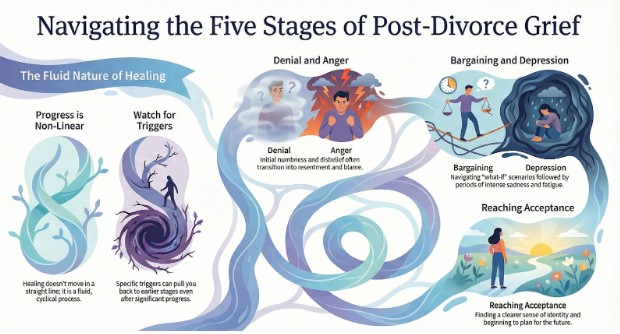
Many people move through grief stages in a non-linear way, and a trigger can pull a person backward even after progress.

  1. Denial. Numbness, disbelief, avoidance.
  2. Anger. Resentment, blame, irritability.
  3. Bargaining. “If I had done X, this would be different.”
  4. Depression. Sadness, fatigue, isolation, reduced motivation.
  5. Acceptance. Integration, calmer planning, clearer identity.

Why Regret Often Peaks After The First Year

Many people operate in logistics mode during the first months. Housing changes, court deadlines, parenting schedules, and financial restructuring can keep emotions muted. When life quiets down, the emotional weight often surfaces.

Common first-year drivers include:

  • Loneliness and social displacement when friend groups shift
  • Co-parenting friction that keeps conflict active
  • Financial pressure from running a household on one income
  • Identity disruption when the “spouse” role ends
  • Anniversary effects around holidays and meaningful dates

If your regret shows up as spiraling self-criticism, it can help to reframe the experience as a normal stage of transition rather than a verdict on the decision. 

For an Illinois-focused process reality check, the divorce timeline and friction points are explained in how long a spouse can drag out a divorce in Illinois, which often clarifies why emotional relief does not arrive on the day the paperwork is signed.

The Legal Reality: Can You Undo A Divorce In Illinois?

Divorce regret can feel emotional and fluid, but Illinois court timelines are structured and deadline-driven. This section separates three different questions. 

Can the divorce itself be undone, can the terms be changed, or do both spouses want to reconcile?

No-Fault Divorce And What “Irreconcilable Differences” Means

Illinois is a no-fault divorce state. Courts focus on whether irreconcilable differences caused an irretrievable breakdown of the marriage, not on proving misconduct under 750 ILCS 5/401

This matters because grief can coexist with a legally sound decision, even when the emotions feel like second-guessing.

If you want a process-level baseline, use the Illinois divorce process to orient what happens from filing through judgment.

The Finality Of The Divorce Decree

Once a judge enters a final judgment of dissolution, your marital status changes immediately. 

The marriage is legally ended, even if you still feel remorse. Legal options after judgment depend on facts, timing, and the specific part of the judgment you want to challenge.

Legal Avenues For Reversing Or Revisiting A Final Judgment

Courts generally do not reverse a divorce because a person regrets the outcome. Post-judgment relief is usually limited to narrow circumstances tied to procedure and fairness.

Motion To Vacate Or Set Aside A Judgment

A motion or petition to vacate typically requires a high legal bar, such as fraud, duress, lack of proper notice, or a serious procedural defect. In Illinois, one path is a petition for relief from judgment under 735 ILCS 5/2-1401. Regret alone is rarely a sufficient basis to vacate a signed judgment.

If you are trying to understand what “going back to court” can look like after the case closes, the overview of going back to court after a divorce is final fits this scenario.

The Appeal Window

An appeal is not a do-over because you changed your mind. An appeal asks a higher court to review whether the trial court correctly applied the law, and deadlines can be short. 

Post-Decree Modifications

Many people do not regret the divorce itself. They regret specific terms, such as parenting schedules, child support, or maintenance. 

Those issues may be modifiable in limited circumstances, typically based on the legal standard that applies to the issue and the facts that have changed since the judgment. For an Illinois statutory starting point on modification concepts, see 750 ILCS 5/510.

Remarrying Your Ex-Spouse After Divorce

If both spouses experience mutual regret and want to reconcile, the simplest legal path is often to remarry. 

Remarrying typically creates a new legal marriage rather than restoring the prior marriage date for all legal purposes, so a brief legal consultation is wise if benefits, estate planning, or prior support obligations are in play.

When reconciliation discussions keep escalating, using a structured negotiation framework can prevent repeat conflict patterns.

Note: Remarrying does not automatically “reset” your legal standing to your original marriage date. Under 20 CFR § 404.331(c) — the federal regulation governing divorced spouse Social Security benefits — remarriage is treated as a disqualifying event that establishes a new legal union, not a continuation of the prior one.

For pension vesting, ERISA (29 U.S.C. § 1053) ties vesting rights to years of service under the plan, not marital history — meaning a new marriage does not carry forward any prior spousal standing accumulated under an earlier union.

Five Steps That Help Most People Move Past Post-Divorce Remorse

Five Steps That Help Most People Move Past Post-Divorce Remorse

Feeling stuck in the “what-if” loop is exhausting, but it is not a permanent state. To transition from rumination to recovery, you must shift your focus from the past to the present reality of your growth. 

Here are five strategic steps to help you navigate this transition.

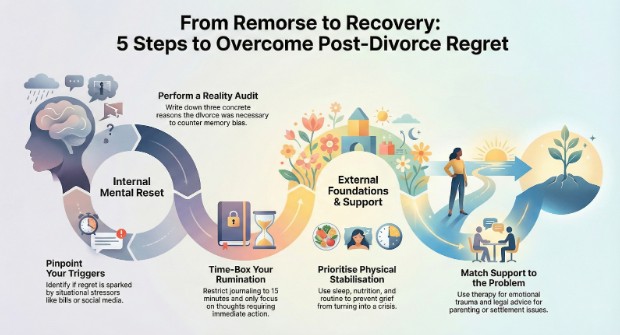
1. Do A Reality Audit Of The Marriage

Regret often grows when memory becomes an unreliable narrator. Write down three recurring reasons the divorce became necessary, and tie each reason to a concrete example. 

This counters fading affect bias and reduces idealization. For people who want a structured approach to decision clarity, divorce pitfalls can help identify patterns that tend to repeat when couples reunite without changing the underlying dynamics.

2. Identify The Trigger Behind The Regret

Ask, “What set this off today?” Triggers are often situational:

  • A child handoff
  • A bill or budget stress
  • A holiday or anniversary
  • Seeing an ex-partner appear “fine.”
  • Social media comparisons

If social media is feeding regret loops or obsessive checking, set boundaries and reduce exposure. 

3. Stabilize The Basics Before You Interpret The Feelings

Sleep, nutrition, movement, and a predictable routine shape emotional intensity. A dysregulated body turns ordinary grief into a crisis story. If you are co-parenting, stability is also protective for children. 

A child-centered approach can help reduce guilt-driven regret and shift focus toward a workable parenting structure, which is outlined in child-centered divorce solutions.

4. Reduce Rumination With Structure

Rumination feels like problem-solving, but it rarely produces new information. Use time boxing. 

Set a 15-minute window to journal, then shift into a planned task. Pair this with a decision rule. “If the thought does not point to an action I can take this week, I write it down and move on.”

If communication spirals are part of the regret story, skill-building is more productive than rehashing. These communication tools can help. 

5. Get The Right Kind Of Support

Different problems require different support.

  • Therapy or counseling helps when regret is driven by grief, identity change, trauma, or anxiety.
  • Legal advice helps when regret is tied to settlement terms, parenting plans, or procedural issues.
  • Structured negotiation models help when a couple wants cooperation but cannot communicate safely without guardrails.

If you are exploring cooperative resolution options, these pages clarify what each model is designed to do. Divorce models, plus a collaborative divorce attorney in Northbrook.

When To Seek Professional Help Urgently

Seek urgent mental health support if you have persistent inability to function, severe anxiety, substance escalation, or thoughts of self-harm. 

Seek immediate legal advice if regret involves coercion, threats, hidden assets, fraud, or unsafe parenting conditions.

Frequently Asked Questions

Is It Normal To Feel Regret After A Divorce Is Final?

Yes. Regret after divorce is common, especially during the first year when routines, finances, and identity shift at the same time. Cognitive dissonance and fading affect bias can make the marriage look better in hindsight. If regret disrupts daily functioning, targeted therapeutic support usually helps.

How Long Does Divorce Regret Usually Last?

Divorce regret varies, but many people feel the sharpest waves during the first 6 to 24 months as the new routine stabilizes. A steadily improving regret often reflects grief. Regret that persists or worsens may signal depression, anxiety, or unresolved trauma that benefits from professional care.

Can You Undo A Divorce In Illinois If You Changed Your Mind?

Usually not just because you changed your mind. Illinois courts treat the judgment as final, and reversal typically requires narrow procedural grounds, such as fraud, duress, or lack of notice under 735 ILCS 5/2-1401. A lawyer can assess deadlines and facts.

Can You Change The Terms After Divorce If You Regret The Settlement?

Sometimes. Many people regret specific terms, not the divorce itself. Parenting, support, or maintenance issues may be modifiable when legal standards are met, often tied to changed circumstances. 

What If Both Spouses Regret The Divorce And Want To Reconcile?

If both people want reconciliation, the most common legal path is remarriage rather than trying to reverse the prior decree. Before taking steps, many couples benefit from structured support to avoid repeating old conflict patterns. 

Is Regret A Sign You Should Have Stayed Married?

Not automatically. Regret can reflect grief, loneliness, financial stress, or co-parenting friction rather than a true desire to rebuild the marriage. A practical test is whether you miss the person or you miss the routine and security. 

Collaborative Divorce: A Constructive Approach to Unwanted Separations

Collaborative Divorce: A Constructive Approach to Unwanted Separations

Amid a heart-wrenching divorce, two people stand at a crossroads. They can either choose the path of bitter litigation or embark on a journey of collaboration and understanding. Which path would you take?

Divorce can be a tough time for families. Collaborative divorce is a new way to handle this process. It aims to make the split less painful and more positive for everyone involved.

In collaborative divorce, both spouses work with lawyers and other experts to find solutions for the whole family.

This approach tries to avoid going to court. Instead of fighting each other, it focuses on open talks and teamwork.

This method can help protect kids from the harm of a bitter divorce and give couples more control over the outcome.

By working together, they can often find better answers to tricky issues like money and child care.

Key Takeaways

  • Collaborative divorce promotes open communication and teamwork between spouses.
  • This approach can lead to better outcomes for children and families.
  • It gives couples more control over decisions about money and parenting.

Understanding Collaborative Divorce

Understanding Collaborative Divorce

According to the American Psychological Association, Around 40 to 50 percent of married couples in the U.S. end up divorcing.

The likelihood of divorce increases with each subsequent marriage, as 60 percent of second marriages and 73 percent of third marriages come to an end.

Collaborative divorce offers a unique approach to separation. It focuses on cooperation and open communication between spouses. This method aims to reduce conflict and find mutually beneficial solutions.

Definition Of Collaborative Divorce

Collaborative divorce is a legal process where both parties agree to settle their divorce without going to court. The couple works with a team of professionals to resolve issues like property division, child custody, and financial matters.

This approach encourages open dialogue and problem-solving. Both spouses commit to honest communication and full disclosure of information.

The goal is to reach a fair agreement that meets everyone’s needs, including the needs of any children involved.

How It Differs From Traditional Litigation

Unlike traditional divorce, collaborative divorce avoids courtroom battles. In litigation, each side fights to “win” against the other. This often leads to increased conflict and stress.

Collaborative divorce focuses on finding solutions that work for both parties. It promotes a more peaceful transition for families.

Key differences include:

  • Less adversarial
  • More control over the outcome
  • Often faster and less expensive
  • Prioritizes children’s well-being
  • Encourages future co-parenting relationships

The Role Of Lawyers, Mental Health Professionals, And Financial Experts

In a collaborative divorce, a team of professionals supports the couple. Each spouse has a lawyer to provide legal advice and guidance.

Mental health professionals help manage emotions and improve communication. They also assist with parenting plans and child-related issues.

Financial experts analyze the couple’s assets and debts. They help create fair financial settlements and budgets for the future.

This team approach ensures that all aspects of the divorce are addressed. It provides comprehensive support for both emotional and practical matters.

The Benefits Of Collaborative Divorce

Collaborative divorce offers many advantages for couples seeking a peaceful end to their marriage. This approach puts problem-solving first and helps families create personalized solutions.

The FACP estimates that 86% of Collaborative matters ended in fully resolving all issues. An additional 2% of clients decided to stay in the relationship.

Focuses On Problem-Solving Rather Than Conflict

Collaborative divorce turns divorce from a battle into a constructive talk. Couples work with trained professionals to find solutions. They learn to communicate better and solve issues together.

This method helps reduce anger and blame. Instead, it encourages teamwork. Couples focus on shared goals, like caring for their kids or splitting assets fairly.

The process teaches useful skills for the future. These skills can help ex-spouses work together after the divorce, especially if they have children.

Allows For Customized Solutions Tailored To The Family’s Needs

Every family is unique. Collaborative divorce recognizes this fact. It lets couples create plans that fit their specific situation.

The process is flexible. Couples can address issues that matter most to them, such as special arrangements for family businesses or complex financial matters.

Experts like financial advisors or child specialists can join the team. They offer insights to help create the best family plans.

This tailored approach often leads to better outcomes. Solutions that benefit both parties feel fair because they helped create them.

Promotes Co-Parenting And Minimizes The Impact On Children

Collaborative divorce puts children first. It helps parents work together to make decisions about their kids’ future.

The process teaches parents how to co-parent effectively. They learn to communicate and make choices together, even after the divorce.

This approach can reduce stress for children. Kids see their parents working together instead of fighting. It helps maintain important family relationships.

Collaborative divorce often includes child specialists. These experts help create parenting plans that support the children’s well-being.

“Collaborative divorce is a way for families to preserve what they value most while still achieving their goals for the future.” – Dr. Jane Smith, renowned family psychologist.

Saves Time And Money Compared To Lengthy Court Battles

Court battles can drag on for months or even years. They often cost a lot of money. Collaborative divorce is usually faster and cheaper.

In this process, couples work together to find solutions. This reduces legal fees and court costs and speeds up the divorce process.

Couples share information openly, reducing the need for lengthy and expensive “discovery” processes common in court divorces.

The focus on problem-solving helps avoid costly conflicts. It leads to quicker resolutions on key issues like property division and support payments.

Preserves Privacy And Confidentiality

Collaborative divorce happens in private meetings, not public courtrooms. This keeps family matters out of public records.

The process includes a confidentiality agreement. This means discussions stay private. Neither spouse can use information from these talks in court later.

This privacy can be crucial for public figures or business owners. It protects reputations and sensitive information.

Private meetings also create a safer space for honest talks. Couples often feel more comfortable sharing their true feelings and needs.

The confidential nature of the process can lead to more open and productive discussions, which often result in better outcomes for both parties.

The Collaborative Divorce Process

The Collaborative Divorce Process

The collaborative divorce process offers a structured approach to resolving marital dissolution outside court.

It involves a series of meetings with professionals to address legal, financial, and emotional aspects while working towards a mutually agreeable settlement.

The Commitment To Collaboration And Transparency

Collaborative divorce starts with both spouses agreeing to work together. They sign a participation agreement pledging to be honest and open throughout the process.

This agreement includes a promise not to go to court. If the process fails, the spouses must hire new lawyers to litigate.

Committing to transparency means sharing all relevant information, including financial documents, property details, and other important facts.

By choosing collaboration, couples create a foundation for constructive problem-solving, often leading to more satisfying outcomes for both parties.

The Series Of Meetings With The Collaborative Team

The collaborative process involves several meetings with a team of professionals. This team typically includes:

  • Lawyers for each spouse
  • A neutral financial advisor
  • A mental health professional or divorce coach

Meetings are held in a neutral setting. The number of meetings varies based on the complexity of the case and the couple’s ability to reach agreements.

During these sessions, the team works together to identify issues, gather information, and explore solutions. The goal is to find common ground and develop mutually beneficial options.

Addressing Legal, Financial, And Emotional Aspects Of The Divorce

Collaborative divorce teams address all aspects of the separation process, including legal issues such as property division, alimony, and child custody arrangements.

Financial aspects cover asset valuation, debt allocation, and future financial planning. The neutral financial advisor helps create fair and sustainable financial solutions.

The mental health professional provides emotional support. They help manage conflicts, improve communication, and focus on the well-being of any children involved.

This holistic approach ensures that all important issues are dealt with comprehensively. It helps prevent future disputes and promotes a smoother transition for all family members.

Crafting A Comprehensive Settlement Agreement

The final step in the collaborative process is creating a detailed settlement agreement. This document outlines all decisions made during the meetings.

Key components of the agreement often include:

  • Division of assets and debts
  • Spousal support arrangements
  • Child custody and visitation schedules
  • Child support calculations
  • Plans for future dispute resolution

Lawyers review the agreement to ensure it meets legal requirements. Once finalized, the agreement is submitted to the court for approval.

This comprehensive document serves as a roadmap for the couple’s post-divorce life. It helps prevent misunderstandings and provides clarity on all aspects of the separation.

If your separation feels overwhelming, we’re here to support you. Our team at Anna K. Law can help you explore the benefits of collaborative divorce and ensure your family’s best interests are at the forefront. Contact us now to start a more peaceful resolution process today.

Is Collaborative Divorce Right For You?

Collaborative divorce offers a unique approach to ending a marriage. It focuses on teamwork and open communication. This method aims to reduce conflict and find solutions for both spouses.

Factors To Consider When Choosing Collaborative Divorce

Collaborative divorce works best for couples who want to avoid court battles. It’s a good fit if you and your spouse can still talk to each other calmly and are willing to share information openly.

This process often costs less than a traditional divorce and can be faster. However, both sides must commit to honesty and fairness.

Consider collaborative divorce to maintain a good relationship with your ex-spouse. This is especially important if you have children together.

The Importance Of Commitment And Open Communication

For a collaborative divorce, both spouses must be fully committed to the process. This means being honest about finances and other important matters and willing to listen to your spouse’s needs and concerns.

Open communication is key. You must share your thoughts and feelings clearly while being ready to hear your spouse’s point of view.

The collaborative process often involves a team of professionals, including lawyers, financial experts, and mental health professionals. Everyone works together to find solutions that benefit both parties.

When Collaborative Divorce May Not Be Appropriate

Collaborative divorce isn’t right for every couple. It may not work if there’s a history of domestic violence or abuse. In these cases, face-to-face meetings might not be safe or productive.

If one spouse hides assets or lies about finances, a collaborative divorce won’t work. For the process to succeed, both parties need to be honest.

Sometimes, couples simply can’t agree on major issues. You might need a judge to decide if you and your spouse have different views on child custody or property division.

Conclusion

Collaborative divorce offers a fresh approach to ending marriages. It prioritizes respect and teamwork. Couples work together to find solutions that benefit everyone.

This method can be less stressful than traditional divorces. It often costs less money and takes less time, and couples keep more control over the process and outcome.

Children may suffer less when parents use collaborative divorce. The focus on cooperation can help maintain better relationships, making co-parenting easier after the divorce.

Trained professionals guide couples through financial, legal, and emotional issues. They help create fair agreements that work for both sides.

Collaborative divorce isn’t perfect for everyone. But for many, it provides a constructive path forward. It can lead to more positive outcomes during a difficult time.

As more people learn about this option, it may become more common. Collaborative divorce represents a shift towards more thoughtful, caring ways to handle family changes.

Time to Get the Legal Support You Deserve

Are you facing an unwanted separation? Collaborative divorce offers a way to navigate this difficult time with less conflict and more control over your future.

While it’s not always easy, it can lead to a more peaceful resolution that benefits everyone involved.

Learn how our skilled collaborative divorce attorneys can guide you through the process. Visit annaklaw.com or call us at (847)-715-9328 to schedule your confidential consultation today.

Frequently Asked Questions

What is the downside of collaborative divorce?

Collaborative divorce may not suit all couples. It requires open communication and a willingness to compromise. If talks break down, both parties must hire new lawyers, which can increase costs and delay the process.

What is the main purpose of the collaborative divorce process?

The main goal is to reach a fair settlement without going to court. Collaborative divorce helps couples come to agreements on their terms. It focuses on the needs of both parties and any children involved.

What are the benefits of collaborative divorce?

Collaborative divorce often leads to less stress and conflict. It can preserve relationships, especially important for co-parenting. The process is usually faster and more private than traditional court battles.

How could collaborative divorce provide solutions to common separation issues?

This approach tackles issues like asset division and child custody creatively. Teams of experts help find win-win solutions. They consider each family’s unique needs and circumstances.

How does collaborative divorce’s cost compare to traditional divorce proceedings?

Collaborative divorce is often more cost-effective. It typically costs between $7,500 and $15,000, while traditional divorces can range from $25,000 to $150,000 or more.

What role do divorce coaches or specialists play in the collaborative divorce process?

Divorce coaches and specialists are key team members. They help manage emotions and improve communication. Financial experts assist with complex money matters. Child specialists focus on the kids’ needs during the process.

10 Mistakes to Steer Clear of When Divorcing Over 50

10 Mistakes to Steer Clear of When Divorcing Over 50

As the saying goes, ‘The only real mistake is the one from which we learn nothing.’ But when it comes to divorcing over 50, some mistakes can cost you dearly.

Divorce after 50 can be a complex and challenging process. Many couples who split up later in life face unique issues that younger divorcees may not encounter. These challenges often involve finances, retirement plans, and family dynamics.

Divorce can be tough at any age. But for those over 50, it brings unique challenges. This type of divorce is called “gray divorce.”

According to data from the Pew Research Center, the divorce rate for adults aged 50 and older has roughly doubled since the 1990s.

Ending a long marriage is difficult. There’s a lot to consider, including retirement savings, health care, and living arrangements.

Avoiding common mistakes is key. Smart choices now can make a big difference later. This guide will help those over 50 navigate divorce challenges.

We’ll look at 10 key errors to avoid. These tips can help make the process smoother. They aim to protect your interests and well-being.

Each situation is different, and what works for one person may not work for another. It’s always best to get advice from experts.

Key Takeaways

  • Financial planning is crucial when divorcing over 50
  • Emotional well-being and family relationships need careful consideration
  • Proper preparation can lead to better post-divorce outcomes

Mistake #1 – Failing To Consider The Financial Implications

Divorcing after 50 can have significant financial consequences. It’s crucial to understand how the division of assets and debts, long-term financial decisions, and post-divorce budgeting can impact your financial future.

A study by the Center for Retirement Research at Boston College found that divorced individuals experience a 7% drop in wealth compared to single individuals.

Overlooking The Impact Of Dividing Assets And Debts

When divorcing over 50, couples often have substantial assets and debts accumulated over decades. Failing to consider how these will be divided can lead to financial hardship.

Retirement accounts, pensions, and Social Security benefits need careful evaluation. These assets may be subject to division, potentially reducing future income for both parties.

Real estate, such as the family home, can be a significant asset. Deciding whether to sell or keep the property requires careful consideration of maintenance costs, taxes, and potential appreciation.

Debt division is equally important. Credit card balances, mortgages, and other loans must be allocated fairly to avoid future financial strain.

Ignoring The Long-Term Consequences Of Financial Decisions

Divorce decisions without considering long-term implications can lead to financial struggles later in life.

Alimony payments may seem manageable initially but can become burdensome over time. It’s essential to factor in potential changes in income or retirement plans.

Tax implications of asset transfers and alimony payments should be carefully evaluated. Certain assets may carry tax liabilities that could impact future financial stability.

Insurance needs often change post-divorce. Health insurance coverage, life insurance policies, and long-term care insurance should be reassessed to ensure adequate protection.

Neglecting To Create A Post-Divorce Budget

Many divorcing couples over 50 fail to create a realistic post-divorce budget, leading to financial stress.

Income changes are common after divorce. Assessing new income sources, including alimony, part-time work, or drawing from retirement accounts is crucial.

Housing costs often increase for both parties. The new budget must include rent or mortgage payments, utilities, and maintenance expenses.

Healthcare costs can be significant, especially for those not yet eligible for Medicare. Budgeting for insurance premiums and out-of-pocket expenses is essential.

Creating an emergency fund should be a priority. This can help cover unexpected expenses and provide financial security during the transition.

Mistake #2 – Keeping The Marital Home Without Careful Consideration

Keeping the marital home after divorce can be costly for those over 50. Before making this big decision, it is vital to weigh emotional ties against financial realities.

Emotional Attachment Vs. Practical Implications

Many people feel a strong connection to their family home. It holds memories and feels familiar during a tough time. But this attachment can cloud judgment about what’s best long-term.

The home might be too big or expensive for one person. It could also need repairs or updates that are hard to afford alone. Emotional reasons often drive this decision but shouldn’t be the only factor.

It’s smart to step back and consider the big picture. Will keeping the house improve life after divorce? Or could selling it open up better options?

Costs Of Maintaining The Home On A Single Income

Running a household on one income is tough. Expenses can quickly become overwhelming. Here are some costs to consider:

  • Mortgage payments
  • Property taxes
  • Home Insurance
  • Utilities
  • Regular maintenance
  • Unexpected repairs

These add up fast. What seemed manageable as a couple might strain a single budget. Making a detailed budget before deciding to keep the house is key.

Unexpected overhead expenses, such as a new roof or furnace, can cost thousands. It’s wise to have a financial cushion for these surprises.

Potential Impact On Other Financial Goals

Keeping the house might mean giving up other assets in the divorce settlement, which can harm long-term financial health. It’s crucial to consider retirement and other goals.

The house could tie up money that could be invested in the future. Selling might free up cash for a more comfortable retirement. It could also provide funds to pursue new interests or travel.

A sound retirement plan is vital after 50. Keeping the house shouldn’t come at the expense of retirement savings. It’s important to balance current housing needs with future financial security.

Mistake #3 – Ignoring The Impact On Retirement Plans

Divorce after 50 can significantly affect retirement plans. It is crucial to understand how splitting assets and updating beneficiaries can change one’s financial future.

Failing To Consider The Division Of Retirement Assets

Retirement accounts are often a couple’s largest asset. These accounts may be split in a divorce through a Qualified Domestic Relations Order (QDRO). This legal document allows the division of certain retirement benefits without tax penalties.

It’s important to know which accounts can be divided. 401(k)s, pensions, and IRAs are usually subject to division. However, Social Security benefits have different rules.

The division isn’t always 50-50. Factors like the length of the marriage and each spouse’s financial situation can influence the split. It’s wise to get professional help to value these assets, as their future worth may differ from their current balances.

Overlooking The Need To Update Beneficiaries

After divorce, many forget to change beneficiaries on their accounts. This oversight can lead to ex-spouses receiving benefits unintentionally.

Review and update beneficiaries on the following:

  • Retirement accounts (401(k)s, IRAs)
  • Life insurance policies
  • Bank accounts
  • Investment accounts

Some accounts, like 401(k)s, require spousal consent to change beneficiaries during marriage. After divorce, you can update these without your ex-spouse’s approval.

Remember that beneficiary designations usually override wills. Failing to update them can cause your assets to go to unintended recipients.

Neglecting To Reassess Retirement Goals And Strategies

Divorce often means adjusting retirement plans. Your financial situation and goals may change significantly.

Steps to take:

  1. Recalculate retirement needs based on single income
  2. Adjust investment strategies to match new goals
  3. Consider working longer or part-time in retirement
  4. Explore downsizing or relocating to reduce expenses

It’s also important to reevaluate your risk tolerance. Your investment mix might need to be adjusted to align with your new circumstances.

Protecting retirement in divorce over 50 may require professional help. A financial advisor can assist in creating a new retirement strategy that fits your situation.

Mistake #4 – Neglecting The Emotional And Mental Health Aspects

Divorce after 50 can be emotionally taxing. Paying attention to mental health and seeking support is crucial during this life transition.

Underestimating The Emotional Toll Of Divorce

Midlife divorce challenges can be intense. Many people over 50 are surprised by the depth of emotions they experience during divorce.

Common feelings include:

  • Grief over the end of a long-term relationship
  • Anxiety about the future
  • Anger or resentment towards an ex-spouse
  • Guilt, especially if there areadult children involved

These emotions can impact daily life and decision-making. Ignoring them may lead to poor choices or prolonged recovery.

It’s important to acknowledge these feelings as normal and valid. Allowing time to process emotions can lead to better healing and clearer thinking for the road ahead.

Failing To Seek Support From Professionals And Loved Ones

Isolation during divorce can worsen emotional distress. Many over 50 divorcees hesitate to reach out for help, but support is crucial.

Professional support options include:

  • Divorce counselors
  • Therapists specializing in midlife transitions
  • Support groups for divorced individuals

Friends and family can offer emotional comfort and practical assistance. Maintaining social connections helps combat loneliness and provides perspective.

Seeking professional help can provide tools for coping with divorce-related stress. A therapist can help navigate complex emotions and develop strategies for moving forward.

Neglecting Self-Care And Personal Growth

During divorce, self-care often takes a backseat. This neglect can harm mental and physical health, slowing recovery.

Essential self-care practices:

  • Regular exercise
  • Healthy eating habits
  • Adequate sleep
  • Stress-reduction techniques like meditation

There are numerous personal growth opportunities after divorce. Many find this time ideal for exploring new interests or rekindling old passions.

Losing interest in activities once enjoyed can signal emotional health neglect. Engaging in hobbies and setting personal goals can boost self-esteem and create a positive outlook for the future.

Divorce at this stage of life can wreck everything you’ve worked for. Without the right guidance, you could lose assets, your home, and your peace of mind. Don’t take that chance—reach out to Anna K. Law before making a costly mistake.

Mistake #5 – Focusing On Revenge Instead Of Resolution

Divorce after 50 can stir up intense emotions. Focusing on reaching a fair resolution rather than seeking revenge against your ex-spouse is crucial.

Letting Emotions Drive Decision-Making

Anger and hurt feelings can cloud judgment during divorce proceedings. These emotions may lead to rash choices that harm both parties in the long run.

It’s important to take a step back and evaluate decisions objectively. Consider seeking help from a therapist or counselor to process emotions in a healthy way.

Mediation can be a useful tool for couples struggling with emotional conflicts. A neutral third party can help guide discussions toward productive outcomes.

Pursuing Litigation As A Means Of Punishment

Some people view courtroom battles as a way to “get back” at their exes. This approach often backfires, leading to higher costs and stress for everyone involved.

Thoughts of revenge may seem like a path to justice, but they actually prolong the pain and suffering. Instead, focus on the fair division of assets and creating a stable future for yourself.

Collaborative divorce or mediation can help couples reach agreements without the adversarial nature of litigation. These methods often result in faster, less expensive resolutions.

Failing To Consider The Long-Term Consequences Of A Contentious Divorce

A bitter divorce can have lasting negative impacts. It may damage relationships with adult children or mutual friends. It can also drain retirement savings through expensive legal fees.

Think about the future you want after divorce. A peaceful resolution allows both parties to move forward more quickly and rebuild their lives.

Taking control of your divorce is key. Don’t let anger or a desire for revenge dictate your actions. Make choices that align with your long-term goals and values.

Consider the emotional toll of a drawn-out legal battle. Focusing on resolution can help preserve your mental health and well-being during this challenging time.

Mistake #6 – Not Considering The Impact On Adult Children

Divorcing after 50 can deeply affect adult children, even if they no longer live at home. Parents often overlook their grown children’s emotional needs during this process.

Assuming Adult Children Won’t Be Affected By The Divorce

Adult children may struggle with their parents’ divorce over 50. They might feel a loss for their childhood home and family traditions.

The end of a long marriage can shake their belief in lasting relationships. Adult children may worry about their parents’ emotional and financial well-being.

They might feel pressured to choose sides or provide emotional support. This can lead to stress and anxiety in their own lives and relationships.

Parents should acknowledge their adult children’s feelings and offer reassurance. Providing stability during family events and holidays can help ease the transition.

Failing To Communicate Openly And Honestly With Children

Open communication is key when divorcing with adult children. Parents should share important information directly with their children.

Honesty about the reasons for divorce can help adult children process the change. It’s important to avoid blaming or speaking negatively about the other parent.

Parents should be clear about plans and any changes affecting the family. This includes discussing living arrangements and financial matters.

It is crucial to listen to and validate adult children’s concerns. Parents can offer professional support if their children are struggling to cope.

Using Children As Messengers Or Confidants

Divorcing parents should avoid using adult children as go-betweens or emotional support. This can put unnecessary stress on the parent-child relationship.

Asking children to relay messages creates tension and forces them to take sides. Parents should communicate directly with each other about divorce matters.

Sharing too many details about the divorce can burden adult children. They may feel responsible for their parents’ emotions or problems.

Parents should seek support from friends, family, or professionals instead. This allows adult children to maintain healthy boundaries with both parents.

It is important to encourage adult children to stay neutral and maintain relationships with both parents. This helps preserve family bonds during and after the divorce.

Mistake #7 – Rushing Into A New Relationship

Divorcing over 50 can leave people feeling lonely and eager for companionship. But jumping into a new relationship too quickly can lead to emotional and legal complications.

Jumping Into A New Relationship Before Healing Emotionally

After a long marriage, it’s important to take time to process emotions and rediscover oneself. Rushing into dating can hinder healing and personal growth. Many people need 1-2 years to fully recover emotionally from divorce.

Rebound relationships often fail because the person hasn’t dealt with past hurts. They may confuse their new partner with a therapist, dumping unresolved issues on them. This puts unfair pressure on the new relationship.

It’s wise to seek counseling or join support groups to work through divorce-related emotions. Building a strong network of friends can also provide needed support during this transition.

Failing To Consider The Impact On Divorce Proceedings

Starting a new relationship before finalizing a divorce can complicate legal matters. It may anger the ex-spouse, leading to more contentious negotiations. This could result in less favorable divorce terms.

Dating during divorce proceedings can also affect the following:

  • Spousal support calculations
  • Property division
  • Child custody arrangements

Judges may view new relationships negatively, especially if marital assets are spent on a new partner. It’s best to wait until the divorce is final before dating openly.

Neglecting To Establish A Strong Foundation For A New Relationship

After divorce, it’s tempting to rush into a serious commitment. However, taking time to build a solid foundation is crucial for long-term success.

Key steps for a healthy new relationship include:

  • Being upfront about divorce history and current situation
  • Discussing financial expectations and goals
  • Introducing new partners to children slowly and carefully
  • Maintaining separate residences initially

It’s important to avoid comparing new partners to ex-spouses. Each relationship is unique and deserves a fresh start. Open communication about needs, boundaries, and future plans helps build trust.

Mistake #8 – Failing To Update Estate Plans And Beneficiaries

Updating estate plans and beneficiary designations is crucial during a divorce over 50. Neglecting this step can lead to unintended consequences and legal complications.

Overlooking The Need To Revise Wills, Trusts, And Beneficiary Designations

Wills and trusts often name spouses as primary beneficiaries. After a divorce, these documents need to be revised. Many people forget to update their estate plans to reflect their new circumstances.

Key documents to review include:

  • Wills
  • Living trusts
  • Retirement accounts
  • Life insurance policies
  • Bank accounts

Failing to update these can result in ex-spouses inheriting assets against the divorced person’s wishes. It’s important to consult with an estate planning attorney to ensure all necessary changes are made.

Inadvertently Leaving Assets To An Ex-Spouse

Without proper updates, an ex-spouse might still receive assets for other beneficiaries. This mistake can happen with:

  • 401(k) accounts
  • IRAs
  • Pension plans
  • Life insurance policies

These accounts often bypass wills and go directly to named beneficiaries. Make sure to change beneficiary designations promptly after divorce.

Some states automatically revoke an ex-spouse’s designation as beneficiary upon divorce. However, relying on these laws can be risky. It’s best to actively update all designations.

Failing To Consider The Impact On Intended Beneficiaries

Divorce can significantly change family dynamics and financial situations. It’s important to think about how these changes affect intended beneficiaries.

Consider:

  • Children from previous marriages
  • Stepchildren
  • Grandchildren
  • Charitable organizations

Updating estate plans ensures assets go to the right people or causes. It also helps prevent family conflicts and legal disputes after death.

Review guardianship arrangements for minor children. Ensure trusted individuals are named to manage inheritances for young beneficiaries.

Your retirement, home, and future are at risk if you make the wrong move in your divorce. Don’t gamble with your life savings. Visit annaklaw.com or call (847)-715-9328 today and let us help you avoid devastating consequences.

Mistake #9 – Not Exploring Alternative Dispute Resolution Methods

Divorcing couples over 50 often overlook options beyond traditional litigation. These alternatives can save time, money, and emotional stress during divorce.

Defaulting To Litigation Without Considering Other Options

Many people assume court is the only way to divorce. This isn’t true. Litigation can be costly and time-consuming. It may increase conflict between spouses.

Gray divorce attorneys often suggest looking at other methods first. These can include mediation, arbitration, or collaborative divorce. Each option has its benefits.

Mediation involves a neutral third party helping couples reach agreements. Arbitration uses a private judge to make decisions. Collaborative divorce involves a team approach to problem-solving.

These methods can be faster and less expensive than going to court. They also allow for more creative solutions tailored to each couple’s needs.

Failing To Explore the Benefits of Mediation Or Collaborative Divorce

Mediation and collaborative divorce offer unique advantages for older couples. These methods focus on cooperation rather than conflict.

In mediation, a trained mediator helps spouses communicate effectively. This can lead to more productive problem-solving, and couples often find solutions that work better for both parties.

Collaborative divorce involves a team of professionals, including lawyers, financial experts, and therapists, who work together to find fair solutions.

Both methods can:

  • Reduce stress and emotional strain
  • Preserve important relationships, especially with adult children
  • Keep financial details private
  • Allow for more flexible and creative agreements

These benefits can be especially valuable for those ending long-term marriages.

Overlooking the Potential for a More Amicable and Cost-Effective Process

Alternative dispute resolution methods can lead to smoother, less expensive divorces. Many couples don’t realize how much they can save by avoiding court.

Mediation can save money and time. It often results in faster resolutions than litigation. This means lower legal fees and less emotional wear and tear.

Collaborative divorce can also be cost-effective. While it involves multiple professionals, it often costs less than a court battle. The focus on cooperation can lead to quicker agreements.

These methods can help preserve assets, which is crucial for those nearing retirement. They also tend to result in more satisfying outcomes for both parties.

Couples can often maintain more control over the process and results by choosing alternative methods.

Mistake #10 – Neglecting To Plan For The Future

Planning for the future is crucial when divorcing over 50. It involves setting new goals, creating a comprehensive plan, and focusing on personal growth. These steps help ensure a smoother transition and a more fulfilling life post-divorce.

Failing To Set New Goals and Priorities Post-Divorce

After a divorce, it’s essential to reassess and establish new goals and priorities. This process helps individuals regain a sense of purpose and direction. Many silver splitters are unsure of what they want in this new chapter of life.

To avoid this mistake:

  • Reflect on personal values and aspirations
  • Set short-term and long-term goals
  • Prioritize health, finances, and relationships
  • Consider new hobbies or career opportunities

When setting these goals, it’s important to be realistic yet ambitious. They should align with one’s current situation and future aspirations.

Neglecting To Create A Comprehensive Plan For Moving Forward

A comprehensive plan serves as a roadmap for navigating life after divorce. Without it, many individuals over 50 may feel lost or overwhelmed.

This plan should cover various aspects of life, including finances, living arrangements, and social connections.

Key elements of a comprehensive plan:

  1. Financial strategy (budgeting, investments, retirement planning)
  2. Housing decisions (keep the family home, downsize, or relocate)
  3. Career goals (continue working, change careers, or retire)
  4. Social network development (maintaining existing relationships and forming new ones)

Review and adjust this plan regularly as circumstances change. Seeking professional advice from financial planners or divorce coaches can be beneficial in creating a solid plan.

Underestimating the Importance of Self-Discovery and Personal Growth

Divorce after 50 presents an opportunity for self-discovery and personal growth. Many individuals make the mistake of focusing solely on practical matters, neglecting their emotional and personal development.

Ways to promote self-discovery and growth:

  • Engage in therapy or counseling
  • Practice mindfulness and self-reflection
  • Explore new interests and passions
  • Invest in personal health and well-being

This period of self-discovery can lead to increased self-awareness and confidence. It helps individuals build a strong foundation for their new life and avoid gray divorce regrets.

By embracing personal growth, those divorcing over 50 can view this life change as an opportunity rather than a setback. It sets the stage for a fulfilling and purpose-driven future.

Conclusion

Divorcing after 50 brings unique challenges. But with care and planning, many pitfalls can be avoided.

Financial awareness is key. Take stock of all assets and debts. Seek professional advice to understand long-term impacts.

Emotional well-being matters, too. Mourning your married self can be a helpful step in moving forward. Avoid isolating yourself or rushing into new relationships.

Legal considerations require attention. Understand how divorce may affect retirement plans, health insurance, and estate planning.

Stay focused on the future. While the end of a long marriage is difficult, it also opens doors to new possibilities.

With proper preparation and a clear mindset, individuals can successfully navigate this transition. The goal is to emerge stronger and ready for the next chapter of life.

Remember, divorce at any age is complex. Patience and self-care are essential throughout the process.

Divorce after 50 can destroy your financial stability if you’re not prepared. Don’t risk losing your retirement or making costly mistakes. At Anna K. Law, we’ll protect your future and ensure you make the right decisions. Call (847)-715-9328 or visit annaklaw.com before it’s too late.

Frequently Asked Questions

What are common financial mistakes to avoid when divorcing later in life?

Failing to create an inventory of assets is a major error. One spouse may better grasp the couple’s finances, leading to an unfair division.

Another mistake is ignoring the future value of pensions. This can result in adequate retirement savings and opportunities for financial flexibility post-divorce.

Overlooking the tax implications of asset division can lead to unexpected costs. Considering the tax consequences of selling or transferring assets during divorce proceedings is crucial.

How can one rebuild their life after a divorce at 50 or older?

Preparing for a new life is essential. This involves setting realistic goals and expectations for the future. Focusing on personal growth and self-care can help individuals navigate this transition.

Pursuing new hobbies, reconnecting with old friends, or seeking therapy are beneficial. Building a support network is crucial.  This can include joining support groups, seeking professional guidance, or strengthening relationships with family and friends.

Are there viable alternatives to divorce for couples over the age of 50?

Couples counseling can help address long-standing issues and improve communication.  This may lead to reconciliation or a more amicable separation. Trial separation allows couples to experience life apart without finalizing a divorce.  This can provide clarity on whether divorce is truly the best option. Mediation offers a less adversarial approach to resolving conflicts.  It can help couples agree on property division and other issues without going to court.

What challenges do men specifically face when going through a divorce after 50?

Men often struggle with emotional support during divorce.  They may have smaller social networks or feel less comfortable expressing their feelings. Financial challenges can be significant, especially if the man is the primary breadwinner.

Alimony payments and asset division may impact retirement plans. Adjusting to a single life can be difficult for men who rely on their spouse for household management.  Learning new skills and routines is often necessary.

What steps should someone take when facing a divorce after 60 with little to no financial resources?

Seeking legal aid or pro bono services is crucial.  Many organizations offer free or low-cost legal assistance to those with limited means. Exploring government assistance programs can provide a safety net.  Social Security benefits, Medicaid, and housing assistance may be available.

Developing a realistic budget is essential.  This involves assessing current expenses, identifying areas to cut costs, and planning for future needs.

How do long-term marriages commonly lead to a ’25-year itch’ and result in divorce during one’s 50s?

Empty nest syndrome can strain marriages. When children leave home, couples may struggle to reconnect or find shared interests.

Personal growth and changing values over time can lead to incompatibility. Partners may develop different goals or lifestyles as they age.

Unresolved conflicts often resurface in later years. Issues that were ignored or suppressed during child-rearing years may become more prominent.

7 Social Media Habits to Avoid During Divorce: Insights from Recent Studies

7 Social Media Habits to Avoid During Divorce: Insights from Recent Studies

Social media plays a big role in many people’s lives today. When going through a divorce, you must be careful about what you post online.

Many people don’t realize how their social media use can affect their divorce case.

Recent studies show that social media activity can hurt divorce proceedings.

What you share on platforms like Facebook or Instagram could be used against you in court.

Being smart about social media habits during a divorce can help protect you legally and emotionally during a difficult time.

1) Posting Negative Comments About Your Ex

Posting Negative Comments About Your Ex

Divorce can be an emotional time, but it’s crucial to avoid posting negative comments about your ex on social media. This habit can have serious consequences for your divorce proceedings and personal life.

Bad-mouthing your spouse on social media platforms can backfire in court. Judges may view such behavior unfavorably, potentially affecting asset division or child custody decisions.

Negative posts can also escalate conflicts and make communication more difficult. This is especially problematic if children are involved, as it can harm co-parenting efforts.

Remember that social media content can be used as evidence in legal proceedings. Even if posts are deleted later, screenshots or archived versions may still exist.

It’s best to refrain from discussing the divorce online altogether. This includes avoiding vague or passive-aggressive posts that might be interpreted as directed at an ex-spouse.

Instead, individuals going through a divorce should seek support from trusted friends, family members, or professional counselors in private settings. This approach helps maintain dignity and protects one’s legal interests during divorce.

2) Sharing Personal Details About the Divorce

Sharing Personal Details About the Divorce

During a divorce, it’s best to keep personal details private. Oversharing on social media can have serious consequences. People should avoid posting about their legal proceedings, financial matters, or emotional struggles.

Discussing the divorce online is a way to get support, but it can backfire. Lawyers may use these posts as evidence in court, which could affect the outcome of property division or custody arrangements.

Publicly sharing details about your divorce, negotiations, or legal strategies can lead to information being used against you in court proceedings​ (Psychology Today).

It’s wise to refrain from airing grievances about an ex-spouse on social platforms. Negative comments can escalate conflicts and make negotiations harder. They might also impact relationships with shared friends or family members.

Sharing details about shopping sprees or vacations can be risky. These posts might be used to question someone’s financial status during property battles. It’s better to keep such activities off social media until the divorce is finalized.

Protecting privacy extends to children as well. Parents should avoid sharing information about custody arrangements or disputes online. This helps maintain a stable environment for kids during a challenging time.

3) Engaging in Public Arguments Online

Getting into online fights during a divorce is a bad idea. Social media platforms can become a battleground for angry spouses, making things worse for everyone involved.

Public disputes on social media can escalate tensions and hurt your case. Courts may view these arguments as proof of poor behavior or an inability to cooperate.

It’s best to avoid posting about your ex or divorce. If you must use social media, keep things neutral and positive. Don’t respond to provocative posts from your ex or their friends.

Remember that anything you post can be used against you in court. Even private messages can be shared or screenshotted. Think carefully before hitting “send” or “post.”

Instead of arguing online, talk to a therapist or trusted friend in private. This is a healthier way to deal with your feelings and keeps them off the internet, where they can cause trouble.

4) Stalking Your Ex’s Social Media Profiles

Checking an ex-partner’s social media profiles can become a harmful habit during divorce. This behavior often leads to increased stress and emotional turmoil.

Many people find themselves tempted to stalk their exes online. It’s important to recognize this urge and take steps to avoid it.

Constantly viewing an ex’s posts and photos can slow the healing process. It may also lead to misunderstandings or unnecessary conflicts during divorce proceedings.

Individuals can unfollow or unfriend their ex-partners on social media platforms to break this habit. This creates distance and reduces the temptation to check their profiles.

Some experts suggest avoiding social media entirely during a divorce. This can help individuals focus on their well-being and personal growth.

Engaging in alternative activities when feeling the urge to check an ex’s profile can be helpful. Going for a walk, reading a book, or calling friends are positive distractions.

Blocking an ex’s number and deleting old messages can further prevent obsessive behavior. These actions support moving forward and focusing on the future.

5) Broadcasting Your Dating Life

Many people feel ready to start dating again after a divorce. However, sharing details about new romantic interests on social media can be risky during divorce proceedings.

Posting about dates or new partners may upset your ex-spouse. This could lead to arguments or make negotiations more difficult. It also affects custody decisions if you have children.

Courts sometimes view active dating during divorce negatively. They may see it as a sign you’re not focused on your family’s wellbeing. Posting about your social life can give your ex’s lawyer material to use against you.

Dating posts can also impact spousal support claims. If you show you’re spending money on dates, it may reduce the support you receive. Or it could increase what you have to pay.

Introducing new romantic relationships on social media during a divorce can complicate the legal process and affect custody arrangements. It’s advisable to keep new relationships private until the divorce is finalized.

It’s best to keep new relationships private until the divorce is final. This helps avoid complications and protects everyone involved. Wait to share news about dating life until after legal matters are settled.

6) Revealing Legal Strategies

Social media can be tempting to share thoughts about an ongoing divorce. But posting about legal plans or advice from lawyers is a big mistake.

Sharing legal strategies online can give the other side an unfair advantage. It may reveal weaknesses in a case or plans for negotiation, which can hurt the chances of getting a good outcome in court.

Lawyers often advise clients to keep quiet about legal matters on social media. Even private messages aren’t always secure; screenshots can be taken and used as evidence.

Posting anything about a divorce case can be risky. Courts may view it as an attempt to manipulate public opinion, which can damage a judge’s credibility.

It’s best to avoid discussing any legal aspects of divorce online. This includes court dates, meetings with lawyers, or settlement offers. Keeping these details private helps protect one’s legal position.

Smart divorce strategies involve staying off social media regarding legal matters. Clients should talk to their lawyers about the best communication methods during the process.

7) Posting About Financial Matters

Social media posts about money can cause problems during a divorce. Sharing details about spending or income might give the other person a court advantage.

People should avoid posting about big purchases or expensive trips. These posts can be used as evidence in property battles. They might affect decisions about asset division or support payments.

It’s best to keep financial information private during a divorce. This includes job changes, new business ventures, or financial struggles. Even innocent posts can be misinterpreted.

Lawyers often check social media for information about a person’s finances. They look for anything that might contradict what someone says in court, and posts about money can hurt a person’s case.

Experts advise being careful with all social media use during divorce. But posts about money need extra caution. It’s safer to avoid sharing any financial details online until the divorce is final.

The Impact of Social Media on Divorce Outcomes

Social media can greatly affect divorce cases. Posts and online activity often become evidence in court, changing how assets are split and child custody is decided.

Social media leaves a lasting trail of our actions online. In divorce cases, lawyers often use these digital footprints as proof. Posts can show hidden assets or bad behavior.

Even deleted content can be found and used in court. Things shared years ago might arise during a divorce, and private messages and photos can become public evidence.

Judges may consider a person’s social media use when deciding on child custody. Posts showing partying or neglect can hurt a parent’s case, while posts showing good parenting can help.

Preserve What Matters Most—Don’t Let Social Media Pull You Apart

When social media strains your marriage, it’s time to seek real solutions. At Anna K Law, we understand that every relationship faces unique challenges, especially in today’s digital world.

Our tailored services, from divorce and collaborative divorce to mediation, are designed to guide you through these trying times with compassion and expertise.

We also handle post-decree modifications and family law appeals, ensuring your legal needs are met even after the dust settles.

Take the first step toward preserving what truly matters. Contact Anna K Law today, and let’s work together to keep your relationship strong and resilient.

Frequently Asked Questions

How can posting on social media impact the legal process of divorce?

Social media posts can be used as evidence in court. Negative comments about an ex-spouse or sharing details about the divorce may harm one’s case. Judges can view these posts as signs of poor judgment or character.

Posts about spending habits or new relationships can affect alimony or child custody decisions. Even seemingly innocent posts can be misinterpreted and used against a person in divorce proceedings.

What precautions should be taken regarding social media privacy settings during a divorce?

Reviewing and tightening privacy settings is essential. Users should limit who can see their posts and personal information. It’s wise to make profiles private and restrict access to friends only.

Blocking or unfriending the ex-spouse and their close contacts can prevent them from accessing potentially damaging information. Turning off location services can also protect privacy during this sensitive time.

Why is it advised to change passwords and secure online accounts when facing divorce?

Changing passwords prevents an ex-spouse from accessing personal accounts. This protects private communications and financial information that could be used in the divorce.

Securing accounts also prevents unauthorized posts or changes to profiles. It is important to remember shared accounts and devices and ensure that all personal data is protected.

How can social media activity be used as evidence in divorce proceedings?

Social media posts can provide evidence of infidelity, hidden assets, or questionable behavior. Photos, check-ins, and status updates can contradict claims made in court.

Messages and comments can show a person’s state of mind or intentions. Timestamps on posts can prove someone’s whereabouts or activities at specific times, which may be relevant to the case.

What are the potential emotional ramifications of social media use during a divorce?

Constantly checking an ex’s profile can hinder emotional healing. Seeing updates about their life can cause distress and prolong the grieving process.

Posting about personal struggles can lead to unwanted advice or judgment from others. Oversharing may also cause regret later when emotions have settled.

How should one manage mutual friends or followers on social media after a divorce?

It’s often best to avoid involving mutual friends in the divorce. Unfollowing or muting posts from shared connections can reduce stress and prevent conflicts.

Some people take a break from social media during this time. This can provide space to heal without the pressure of managing online relationships.

Top 10 Reasons to Think Twice Before Posting During Your Divorce

Top 10 Reasons to Think Twice Before Posting During Your Divorce

Social media plays a significant role in many people’s lives today. Millions of people use sites like Facebook, Twitter, and Instagram daily. However, using social media during a divorce can cause problems.

Posting on social media while going through a divorce may hurt your case or upset your ex-spouse and children.

Lawyers and judges can see what you share online. They might use your posts as proof in court.

This article examines ten key reasons to be careful about social media use during a divorce.

Top 10 Reasons to Think Twice Before Posting During Your Divorce

1: Privacy Concerns

Social media posts can quickly become public during a divorce. Even with strict privacy settings, friends or family might share your content.

Posting personal details can expose sensitive information to your spouse’s legal team. This may include your location, activities, or financial status.

Your posts might reveal things about your children that should remain private. This could impact custody decisions or your children’s well-being.

Venting frustrations about your spouse online can backfire. These posts can be used as evidence in court and affect the judge’s perception of you.

Pictures or comments about new relationships can complicate divorce proceedings. They might influence decisions about alimony or property division.

1: Privacy Concerns

Remember, once something is posted online, it can be difficult to remove it completely. Even deleted posts might be saved or screenshots by others.

Employers or future partners could find old posts about your divorce, which might affect your future job prospects or personal relationships.

2: Courtroom Evidence

Social media posts can become powerful evidence in divorce proceedings. Judges may consider content shared online when making decisions about child custody, property division, and spousal support.

Photos, status updates, and comments can challenge a person’s credibility or character. For example, pictures of expensive purchases might contradict claims of financial hardship.

Text messages may be admissible in court, potentially revealing private conversations or plans. Even deleted posts can sometimes be recovered and presented as evidence.

Courtroom Evidence

Negative posts about an ex-spouse could indicate poor co-parenting abilities, which may negatively impact custody decisions.

Online activity can also suggest hidden assets or income sources not disclosed during financial negotiations. Courts take a dim view of attempts to conceal information during divorce proceedings.

It’s important to remember that once something is posted online, it can be difficult to completely erase it. Even private accounts aren’t guaranteed to remain confidential during legal disputes.

3: Social Media Misinterpretation

Social media posts can be easily misunderstood during a divorce. An ex-spouse or their legal team might take a seemingly innocent photo or comment out of context.

Jokes or sarcastic remarks can be misinterpreted as serious statements. This can affect issues like asset division or child custody in court proceedings.

Even positive posts can be problematic. Sharing about a new purchase or vacation might lead to questions about financial resources or priorities during negotiations.

Vague or ambiguous statements can be twisted to portray someone negatively. For example, a post about feeling frustrated could be used to portray emotional instability.

Social Media Misinterpretation

Friends’ comments on posts can also be misconstrued. Well-meaning support from others might be seen as evidence of inappropriate behavior or relationships.

It’s important to remember that social media activities can be used as evidence in divorce cases. What seems harmless at the time of posting may look different when examined in a legal context.

4: Emotional Outbursts

Divorce can bring up intense feelings. People often want to vent these emotions on social media. This is not a good idea during a divorce.

Angry posts can be used against you in court. They might show you in a bad light to the judge. Your ex’s lawyer could use them to paint you as unstable.

Posting on social media is often a gut reaction to daily events. It may feel good in the moment. But it can cause problems later.

Engaging in social media arguments or seeing posts from your ex-partner can increase emotional distress during an already challenging time (source: Psychology Today).

Emotional outbursts online can affect child custody decisions. They might make you look like an unfit parent. This could hurt your chances of getting the custody arrangement you want.

These posts can also upset your children. They might see them or hear about them from friends. This can make the divorce harder for them.

It is best to find other ways to deal with emotions during a divorce. Talking to friends, family, or a therapist can help. These options are private and won’t be used in court.

5: Custody Battles

Social media posts can have a big impact on custody battles. Judges may look at what parents share online when deciding who gets custody.

Posting pictures of partying or drinking could make a parent seem irresponsible. Even innocent posts might be used against someone in court.

Posts that depict irresponsible behavior or negative comments about your spouse can impact child custody decisions.

Negative comments about the other parent can hurt a custody case. Courts want to see parents who can work together for their kids.

Sharing too much about children online may be seen as poor judgment. This includes details about their daily lives or personal struggles.

Location check-ins could be used to track a parent’s movements. This might raise questions about how they spend time with the kids.

Deleting posts or blocking the other parent can look suspicious. It’s better to be careful about what to post in the first place.

Parents should consider carefully before posting anything during a divorce. What seems harmless could affect custody decisions.

6: Impact on Children

Posting about divorce on social media can greatly affect children. Kids may feel upset or embarrassed when personal family matters become public.

Children often struggle with changes during divorce. Seeing posts about it online can make things even harder for them to process.

Divorce can impact a child’s self-esteem and academic performance. Sharing details publicly may worsen these effects.

Kids need stability during the divorce. Constant social media updates can disrupt their sense of normalcy and security.

Children may feel caught in the middle when parents share negative posts about each other. This can damage their relationships with both parents.

Oversharing can make children vulnerable online. Personal information posted during divorce might be used to bully or target them.

Parents should protect their children’s privacy. Posting about divorce can expose kids to unwanted attention from peers or strangers.

Older children might see their parents’ posts, which can cause distress or change how they view the situation. This can affect their ability to cope with the divorce.

7: Financial Implications

Posting about finances during divorce can have serious consequences. Sharing details about income, assets, or spending habits on social media may be used as evidence in court.

Such posts could affect property division and support payments. For example, bragging about a big purchase might suggest hidden assets or greater financial means.

Revealing financial information can also make a person vulnerable to fraud or identity theft. Criminals might use these details to target the individual or their accounts.

Protecting personal credit scores is crucial during divorce. Social media posts about financial struggles could negatively impact credit applications or job prospects.

Discussing settlement negotiations online is risky. It may weaken bargaining power or violate confidentiality agreements. This could lead to less favorable financial outcomes.

Tax implications of divorce are complex. Sharing tax information or strategies on social media might alert the IRS or create issues with future tax filings.

Potential employers or business partners may see financial posts. This could harm future earning potential or business opportunities.

8: Potential Harassment

Social media posts during a divorce can lead to harassment issues. Sharing personal details might invite unwanted comments or messages from others.

Ex-partners or their friends may use these posts to bother or upset you. They might leave mean comments or send hurtful private messages.

Venting frustrations about your spouse online can backfire. It may provoke them to retaliate, causing more stress and conflict.

People might take sides based on what they see online. This can create a hostile environment and make the divorce process harder.

Posting about new relationships or activities may trigger jealousy. This could increase tension and potential harassment from your ex or their supporters.

Remember that online harassment can affect your mental health. It may also impact your children if they see negative online interactions with their parents or others.

In some cases, online harassment during divorce can even lead to legal issues. It’s best to be cautious and limit what you share to avoid these potential problems.

9: Legal Violations

Posting on social media during a divorce can lead to serious legal issues. Some content might violate court orders or confidentiality agreements. This can result in penalties or even criminal charges.

Sharing details about ongoing legal proceedings is often forbidden. Courts may view this as contempt, leading to fines or other punishments. Discussing legal matters on social platforms can harm one’s case.

Revealing private information about a spouse or children might break privacy laws. This includes financial details, medical records, or other sensitive data. Such actions can result in legal consequences and damage personal relationships.

Making threats or harassing comments online can lead to restraining orders or criminal charges. Even seemingly harmless posts might be interpreted as intimidation or emotional abuse in a divorce context.

Another risk is violating child custody agreements through social media. Posting photos or information about children without the other parent’s consent may breach court-ordered arrangements.

Individuals going through a divorce should consult their attorney about social media use to avoid these pitfalls. Understanding the legal implications of online activity can help prevent costly mistakes.

10: Reputation Damage

Social media posts during a divorce can seriously harm a person’s reputation. What someone shares online can quickly spread and be seen by many people.

Negative or angry posts about an ex-spouse may make the poster look bad. Friends, family, and employers might see these posts and form negative opinions.

Oversharing personal details about the divorce can also damage one’s image. It may make the person seem unprofessional or unable to handle personal matters privately.

Posts showing partying or reckless behavior can harm a parent’s chances in child custody cases. Judges may view such content as a sign of irresponsibility.

Even after the divorce, damaging posts can continue to affect a person’s life. They may impact future relationships or job opportunities. Some employers check social media profiles before hiring.

It’s wise to think carefully before posting anything during a divorce. What seems harmless now could have long-lasting effects on one’s reputation.

Guard Your Future: Think Before You Post

Navigating a divorce is tough enough without the added pressure of social media scrutiny.

At Anna K Law, we see firsthand how posts can become courtroom evidence and complicate divorce proceedings, custody battles, and financial negotiations.

Before you share that status update, consider the implications. Could it impact your custody rights? Might it skew financial settlements?

Let us guide you through the complexities of family law, from collaborative divorces to family law appeals, ensuring that your actions online don’t undermine your goals offline.

Choose prudence—choose Anna K Law.

Frequently Asked Questions

How can social media posts negatively impact divorce proceedings?

Social media posts can be used as evidence in court. Photos, comments, and status updates may contradict statements made during the divorce process, harming a person’s credibility and potentially influencing the case outcome.

Sharing personal information online can also give the other party ammunition to use against you. It’s best to limit social media activity during divorce proceedings.

What are the legal risks of discussing divorce details publicly online?

Sharing divorce details online can violate confidentiality agreements or court orders. This may result in legal consequences or penalties. Public discussions about the divorce can also anger the other party and complicate negotiations.

It’s wise to consult a lawyer before posting anything related to the divorce online. They can advise on potential legal risks and what information should be kept private.

Why should you avoid emotional posting during a divorce process?

Emotional posts can be used against you in court. Angry or vengeful statements may paint you in a negative light. They can affect how a judge views your character and decision-making abilities.

Emotional outbursts online can also escalate conflicts with your ex-spouse. This can make the divorce process longer and more stressful for everyone involved.

In what ways can sharing information on social media affect child custody decisions?

Posts about partying, dating, or neglecting parental duties can harm custody cases. Judges may view such behavior as evidence of poor parenting. Photos or check-ins contradicting claims about your lifestyle or schedule can damage your case.

It’s crucial to be mindful of how social media activity might be interpreted about parenting abilities. Even innocent posts can sometimes be misconstrued.

How does public posting during a divorce affect financial settlements?

Social media can reveal information about assets or income that may impact financial settlements. Posts about expensive purchases or luxurious vacations can contradict claims of financial hardship.

This information can be used to challenge asset declarations or support requests. It’s important to be consistent in all communications, both online and in legal proceedings.

What are the privacy considerations when posting about divorce on the internet?

Once information is posted online, it can be difficult to control who sees it. Even with privacy settings, posts can be shared or screenshotted. This loss of privacy can affect personal and professional relationships.

It’s important to consider the long-term consequences of sharing divorce details online. Future employers or partners may access this information, so protecting one’s privacy during this sensitive time is crucial.

Debunking Myths About Collaborative Divorce: What You Need to Know

Debunking Myths About Collaborative Divorce: What You Need to Know

Divorce can be a difficult and emotional process. Many couples seek ways to end their marriage with less conflict and stress. Collaborative divorce is one option that has gained popularity in recent years.

There are many myths and misconceptions about collaborative divorce. Understanding the facts about collaborative divorce can help couples make informed decisions about handling their separation.

This article will explore some common myths and explain the realities of the collaborative divorce process.

Myth 1: Collaborative Divorce is the same as Mediation

Myth 1: Collaborative Divorce is the same as Mediation

Many people mix up collaborative divorce and mediation. They are different processes with unique features.

Mediation uses a neutral third party to help spouses reach an agreement. The mediator doesn’t give legal advice or make decisions.

Collaborative divorce involves a team approach. Each spouse has a lawyer. Other experts like financial advisors or child specialists may join in.

In collaborative divorce, everyone works together to find solutions. The lawyers give legal advice and protect their clients’ interests.

Both spouses and their lawyers sign an agreement to settle out of court. If they can’t agree, the lawyers must withdraw. This motivates everyone to find a solution.

Mediation can be faster and cheaper than collaborative divorce. However, collaborative divorce offers more support and legal protection.

Both methods aim for a peaceful resolution. The best choice depends on the couple’s specific needs and situation.

Myth 2: Only Amicable Couples can Consider Collaborative Divorce

Myth 2: Only Amicable Couples can Consider Collaborative Divorce

Many people think collaborative divorce is just for couples who get along well. This is not true. Collaborative divorce is designed for couples seeking an amicable resolution but doesn’t require perfect harmony.

Couples who struggle to communicate or agree can still benefit from this process.

The collaborative approach helps reduce conflict and encourages cooperation. Trained professionals guide discussions and help manage emotions.

Even if spouses have disagreements, they can work through issues together. The goal is to find solutions that work for both parties.

This method can be especially helpful for couples with complex situations or high levels of conflict.

Collaborative divorce focuses on problem-solving, not fighting. It gives couples tools to communicate better and make decisions together.

This can lead to more satisfying outcomes, even for those who start the process on less friendly terms.

Couples considering divorce should not rule out collaborative methods just because they’re not on good terms. With the right support, even those facing challenges can succeed through this approach.

Myth 3: Collaborative Divorce is more Expensive than Litigation

Myth 3: Collaborative Divorce is more Expensive than Litigation

Many people believe collaborative divorce costs more than going to court. This idea is often wrong. Collaborative divorce can actually save money in many cases.

Court battles take a long time and rack up legal fees. Lawyers charge for each hour spent preparing and in court, and these costs add up fast.

In collaborative divorce, couples work together to reach agreements. This process is usually quicker than fighting in court, and less time means lower lawyer bills.

Collaborative divorce can be more cost-effective than traditional litigation. It reduces court fees and the need for costly legal battles.

Couples also share the cost of experts in collaborative divorce, which often works out cheaper than each side hiring its experts for court.

The exact cost depends on the couple’s situation. But for many, collaborative divorce offers a more budget-friendly option than going to trial.

Myth 4: People Always end up Back in Court

Many believe that collaborative divorce doesn’t work, and couples always end up in court anyway. This is not true. Collaborative divorce processes often lead to successful resolutions without court involvement.

In a collaborative divorce, both parties and their lawyers commit to reaching an agreement outside of court. This process encourages open communication and problem-solving.

Trained professionals guide couples through negotiations. They help address financial, emotional, and child-related issues constructively.

Many divorces settle outside court through negotiation, mediation, or collaboration. These approaches are often less adversarial than traditional litigation.

While some cases may require court intervention, it’s not the norm for collaborative divorces. Most couples who choose this path find mutually acceptable solutions without judicial involvement.

Collaborative divorce aims to minimize conflict and promote cooperation. This approach often results in more satisfying outcomes for both parties than litigation.

Myth 5: Collaborative Divorce Means giving in too much

Some people think collaborative divorce means one person has to give up too much. This isn’t true. The process aims for fair solutions that work for both parties.

In collaborative divorce, both spouses have lawyers to protect their interests. These lawyers help their clients reach agreements that meet their needs.

The process also often includes financial experts and divorce coaches. They help make sure both spouses understand their options and rights.

Collaborative divorce encourages open communication. This helps spouses find creative solutions that benefit both of them. It’s not about giving in but finding mutually beneficial outcomes.

Unlike court battles, collaborative divorce allows for more flexible agreements. Spouses can craft solutions that fit their unique situation. This often leads to better results for both parties.

The goal is to reach an agreement both spouses feel good about. If one person feels they’re giving up too much, the process isn’t working as it should.

Myth 6: It’s just for Wealthy individuals

This myth suggests that collaborative divorce is only for rich people. In reality, collaborative divorce can be a cost-effective option for many couples, regardless of their financial status.

Collaborative divorce often costs less than traditional litigation. It can save money by avoiding lengthy court battles and reducing attorney fees.

The process allows couples to share experts, like financial advisors or child specialists. This shared approach can lower overall expenses compared to each spouse hiring separate professionals.

Couples with modest incomes can benefit from collaborative divorce, too. It helps them preserve their assets and avoid costly court fees.

The flexible nature of collaborative divorce lets couples tailor the process to their budget. They can choose which experts to involve based on their needs and financial situation.

Many collaborative divorce professionals offer payment plans or sliding-scale fees, making the process more accessible to couples with different income levels.

Collaborative divorce can help protect a family’s financial future. By working together, couples can find creative solutions that benefit both parties without draining their resources.

Myth 7: The Process takes too long

Numerous people believe collaborative divorce is a lengthy process. This myth stems from misconceptions about out-of-court settlements.

In reality, collaborative divorce typically saves time compared to traditional litigation. It reduces the need for court appearances and drawn-out legal battles.

Collaborative divorce allows couples to work at their own pace. They can schedule meetings that fit their lives rather than being bound by court dates.

The process encourages open communication and cooperation. This often leads to faster resolution of issues that might otherwise cause delays in court.

Agreements can be reached more quickly when both parties are committed to finding solutions. This contrasts with adversarial court proceedings, which can drag on for months or even years.

Couples who choose collaborative divorce often report feeling more satisfied with the outcome. They have more control over the process and timeline, leading to more efficient resolutions.

Embrace a New Beginning: Navigate Your Divorce with Compassion and Expertise

Divorce marks a profound change, and feeling apprehensive about the steps ahead is okay. At Anna K Law, we understand the emotional landscape of this life transition and offer a guiding hand through the turmoil.

With us, your divorce process is handled with empathy, ensuring that every decision respects your emotional and practical needs.

Amidst the uncertainty, our collaborative divorce approach stands out. We foster an atmosphere of mutual respect and cooperation. We prioritize your peace, advocating for solutions to protect your rights and dignity.

But our commitment to your family doesn’t stop there. We provide comprehensive support through detailed parenting plans, ensuring your children’s needs are thoughtfully considered.

If life changes require adjustments, our post-decree modifications are managed with the same level of care. And for those facing appeals, we navigate the complexities of family law with a strategy designed specifically for your unique situation.

Ready to start your journey toward healing? Contact Anna K Family Law today.

Frequently Asked Questions

What are the common misconceptions about the collaborative divorce process?

Many people think collaborative divorce is the same as mediation. This is not true. Collaborative divorce involves separate lawyers for each spouse, while mediation uses a neutral third party.

Another myth is that only friendly couples can use collaborative divorce. In reality, it can work for many couples willing to cooperate, even if they don’t get along perfectly.

How does collaborative divorce differ from traditional divorce proceedings?

Collaborative divorce focuses on teamwork. Spouses and their lawyers work together to find solutions. Traditional divorce often involves court battles and a judge making decisions.

In collaborative divorce, couples retain more control over the outcome. They can create unique agreements that fit their family’s needs.

What are the potential benefits of opting for a collaborative divorce?

Collaborative divorce can be less stressful than going to court. It often leads to better communication between spouses, which can help with future co-parenting.

It also allows for creative problem-solving. Couples can find solutions that work best for their situation rather than following strict court guidelines.

Can collaborative divorce save time and money compared to other methods?

Many people believe collaborative divorce is more expensive than litigation. This is often false. Court battles can drag on for months or years, increasing legal fees.

Collaborative divorce can be faster and more cost-effective. Couples work together to reach agreements, which can reduce the time and money spent on the process.

Is collaborative divorce suitable for couples with complex financial situations?

Yes, collaborative divorce can work well for couples with complex finances. The process allows for bringing in financial experts to help sort out complicated assets.

These experts can provide neutral advice to both parties, ensuring a fair division of property and assets.

How can a collaborative divorce impact children and parenting arrangements?

Collaborative divorce often prioritizes children’s needs. Parents work together to create parenting plans that benefit their children.

This process can reduce conflict between parents, which helps children adjust better to family changes. It also sets a positive example of problem-solving for kids.

Mediation: The Heart-Centered Approach to Easing Divorce Tensions with Compassion

Mediation: The Heart-Centered Approach to Easing Divorce Tensions with Compassion

Divorce can be one of the most challenging experiences of our lives. Finding a compassionate and effective way to navigate this process is essential.

Mediation offers a heart-centered approach that promotes collaboration and mutual understanding, easing the tension that often accompanies divorce.

By working with a neutral third party, we can focus on finding solutions that benefit everyone involved, especially when emotions run high.

Understanding how mediation works is key to appreciating its benefits.

Unlike the adversarial nature of the courtroom, mediation aims to foster dialogue and cooperation. This not only preserves relationships but also allows us to have more control over the outcomes.

It’s a process built on trust and open communication, which helps us reach peaceful agreements on crucial matters such as property division and child custody.

There are many advantages to choosing mediation over traditional litigation.

Mediation typically has lower costs and is generally faster. Importantly, it is confidential, making it safer for us to express our concerns and needs.

Exploring this heart-centered approach opens the door to a more respectful and compassionate way of moving forward.

Key Takeaways

Understanding Mediation: A Compassionate Alternative

Understanding Mediation: A Compassionate Alternative

In a heart-centered divorce mediation, the goal is to create a compassionate and supportive environment. This approach prioritizes emotional support and understanding to help families navigate the difficult transition.

Mediation is a structured process where a neutral third party, known as a mediator, facilitates communication between parties to reach a mutually agreeable solution.

Unlike traditional court litigation, mediation is typically quicker and less adversarial. During the sessions, the mediator helps identify underlying issues and encourages open dialogue.

This method is often used for family disputes, including divorce and custody arrangements.

Confidentiality, cost efficiency, and the preservation of relationships are key benefits.

Mediation allows for private discussions, leading to more candid conversations and effective resolutions.

The Heart-Centered Approach

The heart-centered approach in mediation focuses on the emotional well-being of all parties involved.

This method helps reduce tensions and improve communication by nurturing empathy and understanding.

We center our techniques on providing emotional support during divorce, striving to create a safe space where individuals feel heard and respected.

This compassionate approach acknowledges the emotional strains associated with separation.

Mediation can help maintain familial bonds by addressing issues respectfully. Additionally, this method often leads to more sustainable solutions, as both parties are more likely to honor agreements reached in a non-confrontational setting.

Utilizing a heart-centered framework in mediation helps create a compassionate environment that prioritizes the well-being of everyone involved.

The Benefits Of Mediation: Why Choose This Path?

The Benefits Of Mediation: Why Choose This Path?

Mediation offers a unique approach to managing divorce by fostering communication, reducing costs, and maintaining privacy. It supports a more amicable resolution compared to traditional litigation.

Preserving Relationships

Preserving relationships should be a top priority when undergoing a divorce.

Unlike adversarial court proceedings, mediation facilitates a collaborative environment where both parties can express their concerns and work toward mutually beneficial solutions.

This collaborative divorce process can help reduce hostility and promote a more positive post-divorce relationship, which is especially important when children are involved.

By focusing on open communication, mediation can create an atmosphere that supports ongoing co-parenting and reduces the emotional stress commonly associated with traditional divorces.

Cost-Effectiveness

Divorce litigation can be financially draining, often costing between $15,000 and $40,000.

In contrast, divorce mediation is significantly more affordable, typically ranging from $1,500 to $3,000 for both parties combined.

This makes mediation a practical choice for those seeking cost-effective divorce options.

Avoiding the costs associated with court fees and prolonged legal battles enables families to allocate their resources more efficiently.

By choosing mediation, we can achieve a fair and efficient divorce process that minimizes financial strain on both parties.

Confidentiality

Privacy is a significant concern during divorce proceedings. Unlike public court records, mediation sessions are confidential, ensuring that personal and sensitive information remains private.

This privacy allows us to discuss issues openly without fear of public exposure.

Confidentiality in divorce mediation helps protect the dignity of both parties and can lead to more honest and constructive conversations.

This private setting encourages a more positive environment, promoting the best solutions for everyone involved.

The Mediation Process: What to Expect

The Mediation Process: What to Expect

When navigating the complexities of divorce, mediation offers a structured pathway to achieve amicable resolutions.

Couples can reach agreements that satisfy both parties without going to court by focusing on cooperation and effective communication.

Steps In The Mediation Process

The mediation process typically begins with an initial consultation where the mediator explains the procedure and establishes ground rules.

In this session, both parties provide background information and discuss their expectations.

Next, we identify key issues such as asset division, child custody, and support. This ensures that all concerns are addressed comprehensively.

We then explore potential solutions, with the mediator facilitating open discussion and providing guidance.

As discussions progress, the mediator helps us draft an agreement detailing all settled terms.

Once both parties are satisfied, this agreement is finalized and can be submitted to the court for approval, making the process efficient and collaborative.

Real-Life Example

Let’s consider a couple with two young children. They have differing views on parenting time but agree on educational plans.

During mediation, they discuss and reach a shared custody arrangement that allows both parents to spend quality time with the children.

They also tackle financial matters like child support and property division.

By focusing on mutual goals, they avoid the stress and expense of a lengthy court battle, demonstrating how mediation fosters cooperation and understanding in co-parenting.

Tools And Techniques

Mediators employ various tools and techniques to facilitate the process.

One common approach is active listening, where mediators ensure both parties feel heard and understood.

Brainstorming sessions encourage creative solutions, while reframing helps us see each other’s perspectives more clearly.

For couples with children, concentrates ond techniques in child-focused mediation prioritize the kids’ best interests, ensuring that parenting plans address their needs.

Moreover, private caucuses allow each party to discuss sensitive issues confidentially with the mediator, fostering a safe and constructive environment for resolution.

Common Misconceptions About Mediation

Mediation is often misunderstood, with many people having misconceptions about its purpose and effectiveness.

Addressing these myths can help us better appreciate the benefits of mediation in easing divorce tensions.

Myth Vs. Reality

Many people think mediation is just like going to court. This is far from the truth. Unlike litigation, where a judge makes the final decision, mediation is a facilitated negotiation.

A neutral intermediary helps both parties reach an agreement they are happy with. Another common myth is that mediation signifies weakness.

In reality, choosing mediation shows wisdom and a desire for a peaceful resolution.

Strong individuals and couples often prefer mediation as it focuses on cooperation rather than conflict.

Some believe mediation agreements aren’t enforceable. This is incorrect.

Terms agreed upon in mediation are put into writing, documented, and signed. These agreements are just as legally binding as court orders, ensuring that both parties adhere to their jointly created terms.

Leading experts emphasize the emotional and financial benefits of mediation.

As Lee from Harvard Law School noted, mediation saves money and time and helps preserve relationships.

Mediators like Ann Goade stress the importance of active listening, which fosters empathy and understanding between parties.

A prominent figure in the field, Hoffman, echoes similar sentiments in his discussions about alternative dispute resolution.

He highlights how tailored approaches can meet the specific needs of each family. These insights underline that mediation is not just about resolving conflict but also about nurturing a respectful dialogue.

These types of mediation also show success across various conflict styles, including facilitative and transformative mediation.

This diversity in approach ensures that mediation can adapt to different personalities and conflicts, further solidifying its position as a practical and compassionate solution for divorcing couples.

Summary

Mediation helps people talk openly and understand each other better, making it less stressful than going to court. This kinder approach reduces emotional pain and helps everyone involved feel more at ease.

We can find emotional balance and grow stronger during tough times by using heart-centered techniques, like focusing on love and compassion.

Following a clear plan in our healing journey also helps us become more resilient and confident. Remember, healing from divorce isn’t just about legal steps; it’s about caring for our hearts, too.

Ready to Navigate Your Divorce with Compassion and Confidence?

 At Anna K Law, we believe that divorce doesn’t have to be a battle. Our heart-centered mediation approach prioritizes your emotional well-being while helping you achieve fair and peaceful resolutions.

Whether you need assistance with parenting responsibilities post-decree modifications or family law appeals, we are here to guide you every step of the way.

Contact us today to schedule a consultation and explore how our tailored services can provide you with the support and solutions you need.

People Also Ask

What is mediation, and how does it differ from traditional court litigation?
Mediation is a process where a neutral third party helps both parties reach a mutually agreeable solution in a divorce. Unlike traditional court litigation, which is often adversarial and stressful, mediation focuses on open dialogue and cooperation, making it a more peaceful and collaborative approach.

How can mediation help reduce the emotional strain of divorce?
Mediation promotes a heart-centered approach that encourages empathy, understanding, and compassion. By focusing on mutual respect and open communication, mediation helps reduce the emotional pain and stress that often accompany divorce, allowing both parties to feel more at ease during the process.

What are the benefits of choosing mediation over litigation?
Mediation offers several advantages over litigation, including lower costs, faster resolution, confidentiality, and the preservation of relationships. This approach allows both parties to express their concerns in a private, safe environment and reach agreements that work for everyone involved.

How does mediation support co-parenting after divorce?
Mediation facilitates open communication and collaboration, crucial for maintaining a positive co-parenting relationship after divorce. By focusing on the children’s best interests and creating mutually agreeable parenting plans, mediation helps reduce hostility and supports ongoing cooperation between parents.

Is mediation legally binding, and how does it compare to court orders?
Yes, agreements reached through mediation are legally binding once they are documented, signed, and submitted to the court for approval. These agreements are just as enforceable as court orders, ensuring that both parties adhere to the terms they have created together.

What are common misconceptions about mediation, and why are they incorrect?
Some common misconceptions about mediation include the belief that it’s similar to going to court, that it’s a sign of weakness, or that the agreements are not enforceable. In reality, mediation is a facilitated negotiation that focuses on cooperation rather than conflict. It is a wise and effective way to reach a peaceful resolution, and the agreements are legally binding, just like court orders.

Equitable Distribution vs. Equal Distribution: Understanding Asset Division in Divorce

Equitable Distribution vs. Equal Distribution: Understanding Asset Division in Divorce

When couples divorce, dividing assets can be complex. Two main approaches exist: equal distribution and equitable distribution.

Equal distribution splits everything 50/50, while equitable distribution aims for fairness based on each situation.

Equitable distribution is used in most U.S. states and considers factors like income, future needs, and contributions to the marriage when dividing property.

This method allows for flexibility and can result in uneven splits if deemed fair. For example, a stay-at-home parent might receive a larger share of assets to account for their non-financial contributions.

Nine states use equal distribution, which divides marital property evenly regardless of individual circumstances. This approach is simpler but may not account for unique situations. Understanding these differences is key for anyone divorcing or considering one.

Key Takeaways

  • Equitable distribution focuses on fairness, while equal distribution splits assets 50/50
  • Courts consider various factors when determining equitable distribution of marital property.
  • State laws greatly impact how assets are divided during divorce proceedings.

What Is Equal Distribution?

Equitable Distribution

Equal distribution is a method of dividing assets in a divorce. It means splitting everything 50/50 between both spouses.

In this approach, each person gets an equal share of all marital property, including money, houses, cars, and other valuable items.

Equal distribution aims for fairness through sameness. It doesn’t consider factors like who earned more or who took care of the kids.

Some benefits of equal distribution:

  • Simple to understand
  • Quick to implement
  • It feels fair to many people

But it may not work well for all couples. Some think it’s too rigid and doesn’t account for unique situations.

Equal distribution is not used in most U.S. states. Only a few places, like California, follow this strict 50/50 split for divorce asset division.

Most states prefer a different method called equitable distribution. This allows for more flexibility in dividing assets based on various factors.

What Is Equitable Distribution?

Distribution

Equitable distribution is a method used to divide property in a divorce. It aims for fair distribution of assets, not always equal splits.

Courts in most states use this approach when couples can’t agree on asset division. The goal is to achieve legal fairness in property allocation.

Equitable distribution doesn’t mean a 50/50 split. Instead, it focuses on what’s fair based on various factors.

These factors may include:

  • Length of marriage
  • Each spouse’s income and earning potential
  • Contributions to the marriage
  • Age and health of each spouse

In equitable distribution states, judges have flexibility in dividing assets. They can award unequal shares if they believe it’s fair.

This method applies to marital property, which includes assets acquired during the marriage. Separate property, owned before marriage or received as gifts, is usually excluded.

Equitable distribution aims to prevent unfair outcomes. It considers each spouse’s financial situation and future needs.

Courts may also divide debts using equitable distribution principles, ensuring a balanced asset and liability approach.

Factors Considered In Equitable Distribution

Factors Considered In Equitable Distribution

Courts look at many factors when dividing assets in a divorce. These factors help judges decide what’s fair for both spouses.

One key factor is the length of the marriage. Longer marriages often lead to more equal splits of marital property.

The court also looks at each spouse’s income and earning power. This helps balance things if one person makes much more money.

The health and age of each spouse matter, too. Someone with health issues may need more support.

Contributions to the marriage are important. This includes both money earned and work done at home.

The court considers who will take care of any children. The parent with more custody might get to keep the family home.

Joint property and debts are split up. The judge looks at what each person owns separately, too.

Sometimes, one spouse gives up career chances to support the other. The court thinks about this sacrifice.

If someone wastes marital money, they might get less in the split. This is called the dissipation of assets.

After divorce, the judge also considers each person’s needs, ensuring that both can support themselves.

Florida State Laws and Their Impact

Florida’s divorce laws follow the principle of equitable distribution. This means the court aims for a fair, not necessarily equal, division of marital assets.

The state’s equitable distribution statute (F.S. §61.075) allows courts to divide marital assets in divorce proceedings. It outlines a structured approach to property division.

Key steps in Florida’s equitable distribution process:

  1. Classify assets as marital or non-marital
  2. Determine valuation dates
  3. Assess asset values
  4. Distribute marital property

Courts consider several factors when dividing assets:

  • Marriage duration
  • Each spouse’s economic circumstances
  • Contributions to the marriage
  • Career sacrifices made by either spouse

Florida is not a community property state. Instead, it uses equitable distribution to achieve fairness in asset division.

The law allows for unequal distribution when justified. Judges may award a larger share to one spouse based on relevant factors.

Florida’s approach aims to balance each party’s needs and contributions. It provides flexibility to address unique circumstances in each divorce case.

Conclusion

Equitable and equal distribution are two key approaches to dividing assets in divorce. Most states use equitable distribution to split property fairly, but not always equally.

Courts consider many factors when determining a fair division. These may include each spouse’s income, future earning potential, and contributions to the marriage.

Equitable distribution aims to achieve a fair outcome for both parties. This doesn’t always mean a 50/50 split.

Understanding the difference between equitable and equal distribution is crucial in divorce proceedings. This knowledge can help spouses set realistic expectations for their divorce settlement.

Working with a qualified attorney can be helpful. They can explain how local laws may affect asset division in a specific case.

Ultimately, the court aims to ensure both parties can move forward financially after divorce. Whether through equitable or equal distribution, the focus is on a fair resolution for all involved.

Protect Your Future: The Right Approach to Divorce Asset Division

Deciding how to divide assets during a divorce can be one of the most stressful parts of the process, fraught with financial fears and uncertainties about the future.

At the law office of Anna Krolikowska, we offer both equitable and equal distribution options, tailoring our approach to fit your unique situation.

With equitable distribution, we consider factors like your contributions to the marriage and future needs, ensuring that the outcome feels fair, not just equal.

Beyond divorce, we also handle collaborative divorce, mediation, and post-decree modifications, providing comprehensive support tailored to your circumstances.

Don’t let uncertainty about asset division complicate your divorce. Contact us today to secure a strategy that respects your contributions and protects your future.

Frequently Asked Questions

What factors are considered in determining equitable distribution of assets in a divorce?

Courts consider each spouse’s income and future earning potential, the length of the marriage, and each person’s age and health. Non-financial contributions, like childcare, are also weighed.

Other factors include tax consequences and whether one spouse wasted marital assets. The court may also consider any prenuptial agreements.

How is the process of equitable distribution different from dividing property equally?

Equitable distribution focuses on fairness, not a 50-50 split. It considers many factors about the marriage and each spouse’s situation, while equal distribution simply divides everything in half.

Equitable distribution allows flexibility based on each case’s unique circumstances. Equal division applies the same formula to all divorces regardless of individual factors.

Can you give an example of how equitable distribution is applied in divorce proceedings?

In a 20-year marriage, one spouse was the primary earner while the other raised children. The court may award the stay-at-home parent more assets to account for lost career opportunities.

Another example: If one spouse racked up gambling debts, the court may assign those debts solely to that spouse rather than splitting them.

How is the division of assets affected in states that follow equitable distribution laws versus community property laws?

Equitable distribution is used in 41 states. It allows courts to divide property fairly based on various factors. Community property states generally split all marital assets 50-50.

The equitable distribution gives judges more leeway to consider each case’s unique aspects, while community property laws apply a more rigid formula.

What steps are involved in calculating equitable distribution during a divorce?

First, all assets and debts are identified and valued. Next, they’re classified as marital or separate property. Marital property is typically subject to division.

The court then weighs various factors to determine a fair split. This may involve financial experts and property appraisals. Finally, the judge issues an order dividing the assets.

How might an equitable distribution worksheet aid in the divorce process?

An equitable distribution worksheet helps organize and value all marital assets and debts, clearly showing the couple’s financial situation.

The worksheet can highlight areas of agreement and dispute. It serves as a tool for negotiation and can help streamline the court process if needed.

5 Essential Steps to Navigating a Contested Divorce

5 Essential Steps to Navigating a Contested Divorce

Going through a contested divorce can be one of the most challenging experiences in a person’s life.

The complexity of legal filings, child custody battles, and asset division can overwhelm the process.

It’s important to approach this difficult period with a clear strategy and understanding of the necessary steps.

A well-thought-out plan can help ease the stress and ensure a fair outcome.

This article outlines five essential steps to remember while navigating a contested divorce, seeking to provide a guiding framework for those facing this arduous journey.

Effective strategies and knowledge can make a significant difference in the endurance and resolution of such disputes.

1) Hire a Competent Attorney

Hire a Competent Attorney

Having a skilled attorney is crucial in a contested divorce. The legal process can be complex and lengthy, and an experienced divorce lawyer can help navigate the procedures and paperwork.

A competent attorney guides the best strategies. They can advocate for their client’s interests in child custody, support, and asset division.

Researching and choosing a lawyer with a good track record is important. Look for someone experienced in contested divorce cases. Reading reviews and getting recommendations can help.

Legal fees vary widely; attorneys may charge from $200 to over $1,000 per hour. Discussing fee structures upfront can prevent unexpected costs later.

Engaging a knowledgeable attorney can alleviate some stress. They can handle negotiations and court proceedings, allowing their client to focus on personal matters. This professional support can significantly impact the case’s outcome.

Are you feeling overwhelmed by your contested divorce? Let Anna K. Law empower you with clarity and support. Reach out now for a free consultation and regain control of your future.

2) Understand Your Finances Thoroughly

Understand Your Finances Thoroughly

Understanding your finances is crucial during a contested divorce. This means grasping your assets, liabilities, income, and expenses.

Collect all relevant financial documents, including bank statements, tax returns, and pay stubs.

Knowing the value of shared assets like homes, cars, and investments is essential.

It’s also important to account for debts, including mortgages, loans, and credit card balances. This information will help when negotiating the division of assets and debts.

Consider how the divorce might affect ongoing financial needs. Spousal or child support could be necessary. Estimating these costs ahead of time helps in planning and negotiating terms.

Engaging a financial advisor can be beneficial. With professional assistance, they can provide insights and strategies for managing finances during and after the divorce. This step also ensures everything is noticed.

By staying organized and informed about personal and shared finances, individuals set themselves up for a smoother process.

3) Gather Evidence and Documentation

Gather Evidence and Documentation

In a contested divorce, gathering evidence is essential. Both parties must collect documents to support their claims.

This can include bank statements, tax returns, and property deeds. This evidence will help in matters like asset division and alimony.

Witnesses might be needed. Friends, family, and professional can provide valuable testimony. Their statements can support your case in court.

Emails, text messages, and social media posts can also be critical. These items can show intentions, behaviors, and agreements made.

Organizing this information is key. Keep everything in a clear and accessible format. This will help your attorney present a strong case.

Legal filings and paperwork must be accurate. Errors can delay the process and weaken your position.

It is essential to act quickly. Gathering evidence can be time-consuming, but starting early will help ensure you have everything you need.

Professional help can make a big difference. Attorneys and legal professionals can guide you through the process. They can ensure that you meet all legal requirements for documentation.

Proper documentation is crucial for a fair outcome. It helps ensure that all aspects are considered in the final decision.

Do you dread the thought of a messy courtroom battle? Explore a kinder approach with Anna K. Law’s collaborative divorce services. We concentrates on in turning conflict into cooperation, helping you preserve family harmony and protect what matters most. Learn how we can help you achieve peace of mind.

4) Maintain Clear Communication

Clear communication is crucial during a contested divorce. Misunderstandings can lead to unnecessary conflicts. Establishing clear boundaries and preferred methods of communication can help.

For example, agreeing on whether to use email, text messages, or phone calls can reduce stress and confusion.

It’s important to be respectful and concise. Avoid letting emotions dictate your words. Being brief and to the point helps keep the process smooth and focused.

Additionally, written communication can serve as a record, which can be useful if disputes arise later. Make sure to save important emails and messages.

Working with legal representatives also requires clear communication. Discussing legal processes, rights, and implications of decisions helps avoid miscommunication.

This ensures that all parties are on the same page and aware of their responsibilities.

Keep the conversations focused on practical matters. If children are involved, prioritize their well-being in these discussions. This not only eases the process but also helps foster a cooperative environment.

Suggestion: Even if communication fails in marriage, using communication tips can make a difference. Keeping it brief, informative, and friendly is a good approach. This helps maintain a professional relationship throughout the proceedings.

5) Consider Mediation

Mediation offers a less adversarial way to handle a contested divorce. It involves a neutral third party, the mediator, who helps the couple discuss and resolve their issues. This process can lead to more amicable outcomes compared to court battles.

Couples maintain control over the timeline and decisions during mediation. This can save time and reduce the emotional strain often accompanying lengthy court procedures. A detailed divorce mediation process helps couples understand what to expect.

One significant benefit of mediation is its cost-effectiveness. It can be much less expensive than going to court, which can be especially important for couples looking to manage their finances during a divorce.

Confidentiality is another key aspect. Mediation sessions are private, which can make discussions more open and honest.

The mediation agreement typically includes provisions on how to handle confidential information.

Preparing for mediation is essential to gathering all relevant documents and understanding the mediation process.

Mediation provides a structured yet flexible way to resolve divorce disputes. It offers a path to reach mutual agreements while avoiding the adversarial nature of court proceedings.

Understanding Contested Divorce

A contested divorce occurs when the spouses cannot agree on essential aspects of their separation. These include property division, child custody, and spousal support payments.

Because they cannot agree, these issues are typically resolved through court proceedings. The process begins when one spouse files a divorce petition, initiating legal proceedings.

This type of divorce often explores various legal filings, hearings, settlement proposals, and sometimes a trial, making it lengthy and costly.

Such divorces might require mediation, but a judge will decide if agreements remain unreachable.

Common Reasons for Contested Divorce

Contested divorces often arise from disagreements on pivotal issues. Common reasons include disputes over child custody arrangements, where both parents may want primary custody or differ on visitation schedules.

Financial disagreements are also frequent, especially regarding spousal support or the division of assets like homes, businesses, or retirement accounts.

Infidelity or other forms of marital misconduct can also complicate matters, as they often bring emotional elements into the negotiations.

Moreover, some couples struggle to communicate effectively or harbor resentment, challenging amicable settlements.

These factors contribute to a more adversarial and drawn-out divorce process.

Need help to protect your rights and assets during a contested divorce? Anna K. Law offers professional legal advice tailored to your unique situation. Gain peace of mind knowing you have a skilled advocate on your side. Discover your options today and start building a secure future.

Frequently Asked Questions

What is the difference between uncontested and contested divorce proceedings?

In an uncontested divorce in Illinois, both parties agree on key issues like child custody and asset division, allowing for a smoother and quicker resolution. A contested divorce involves disputes that require legal resolution through more complex and lengthy court proceedings.

How can one navigate a contested divorce without legal representation in Illinois?

Navigating a contested divorce without an attorney in Illinois is challenging. It involves understanding specific state legal requirements, meticulously following court procedures, gathering the necessary documentation, and potentially seeking limited legal advice for intricate issues.

What steps are involved in filing for a contested divorce in Illinois?

The filing of a contested divorce in Illinois begins with one spouse filing a divorce petition. The petition is then served on the other spouse, and preliminary hearings are attended. Evidence is exchanged, and the trial may proceed if agreements are not reached.

How does the presence of children affect the contested divorce process in Illinois?

In Illinois, the presence of children adds significant complexity to a contested divorce. The court prioritizes the children’s best interests, focusing on custody, visitation rights, and child support. Parents might need to attend mediation or parenting classes before decisions are finalized.

What kind of financial entitlements can a spouse expect in an Illinois divorce?

In an Illinois divorce, financial entitlements may include spousal support, division of marital assets, and child support. The amounts are determined based on factors like the length of the marriage, each spouse’s financial situation, and contributions to the marriage.

What are the typical durations and costs associated with contested divorces in Illinois?

Contested divorces in Illinois can vary in duration, typically taking several months to over a year, depending on the complexity of the issues involved. Costs can include attorney fees, court costs, and expenses for Professional witnesses or mediation, which can vary widely.